AI-Guided Intake Platforms That Route Skin Concerns to Licensed Clinicians
Automated screening streamlines dermatology queues and frees specialists for complex cases.
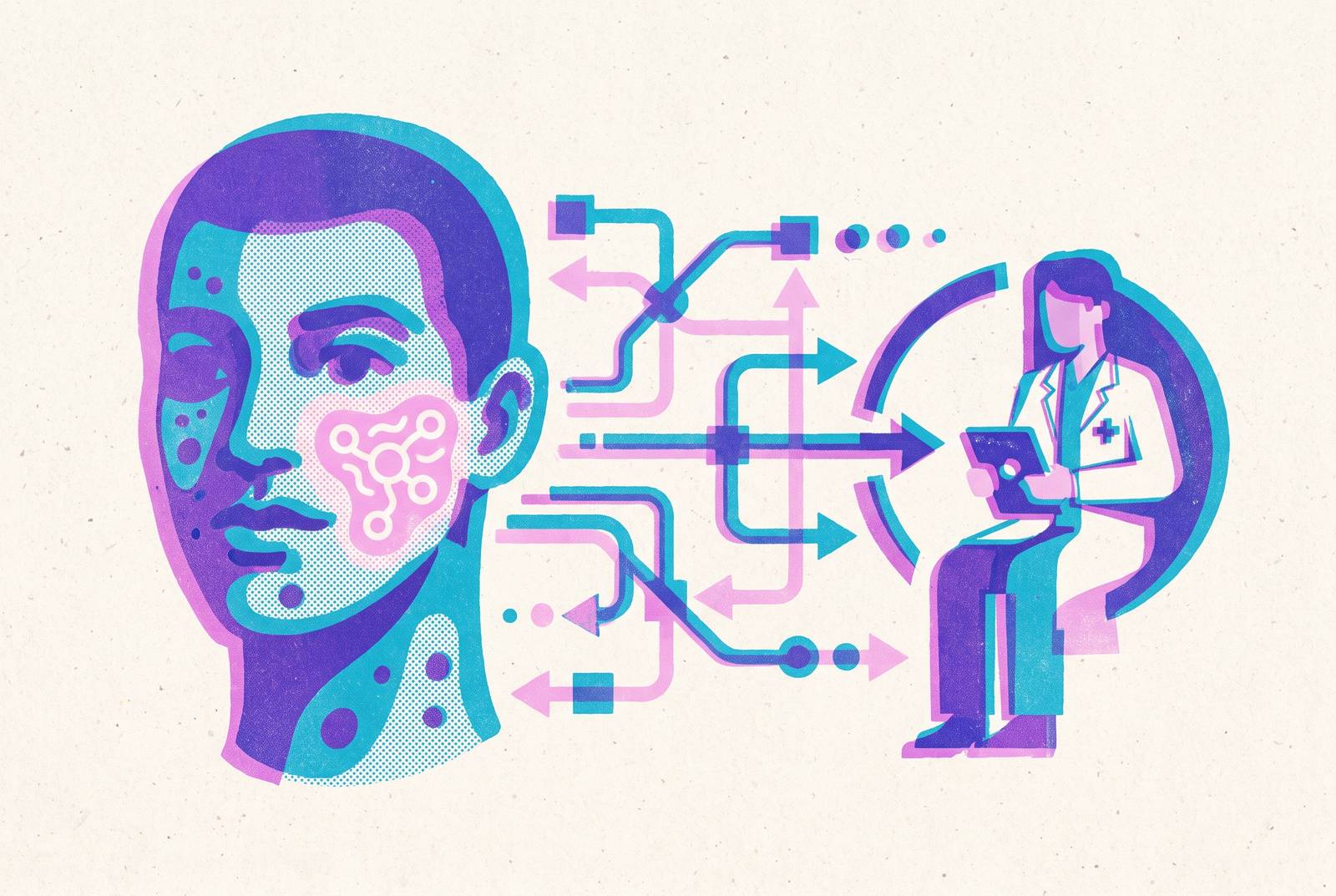
AI-guided intake platforms for skin concerns do the work that comes before a clinical decision. They use images and structured questions to help sort cases by urgency and prepare them for licensed clinician review. Their value lies in making the handoff to the person responsible for deciding what care a patient needs faster and better informed.
The structural problem AI intake is designed to solve
A dermatology queue can contain a straightforward skin concern and a condition that needs urgent attention, yet both require someone to review the information before their urgency is clear. Clinicians spend time sorting cases before they can assess and treat them. Patients may wait days even when their concerns are straightforward. The bottleneck includes both the number of appointments available and the work required to decide who needs which appointment in the first place.
The step that precedes clinical judgment has historically drawn on the same licensed clinician time as the clinical decision itself. Collecting symptoms, making sense of submitted photographs and establishing priority all compete with the work that follows. When those tasks arrive as an unsorted bundle, the queue consumes clinical capacity before it delivers care.
The cost is greater where there are too few dermatologists, including rural areas and underserved urban communities. A backlogged queue leaves patients with urgent conditions waiting beside patients with benign ones, and the delay itself can cause harm. General practitioners absorb some of that overflow, but their diagnostic agreement with dermatologists leaves meaningful room for error. This does not mean every skin concern requires a specialist. Triage overhead and inaccurate routing are linked because specialists have limited time for the cases that need them.
What AI-guided intake does before a clinician sees the case
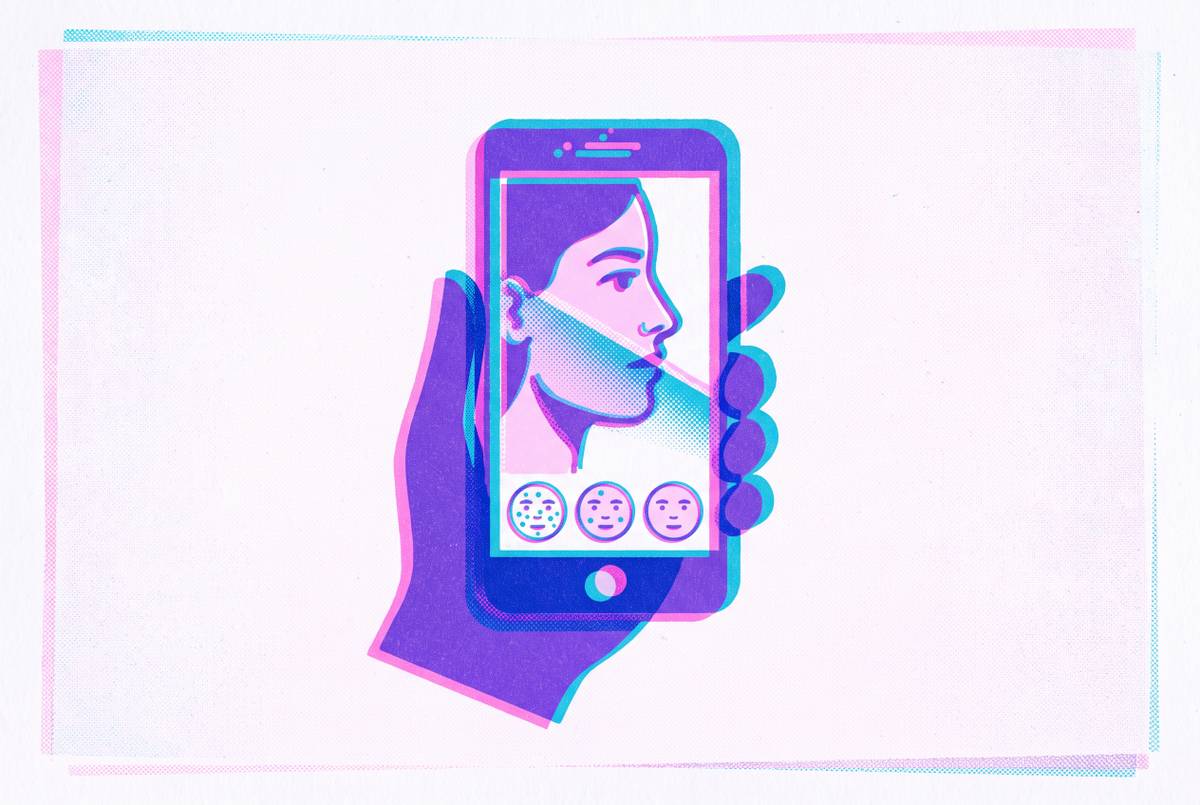
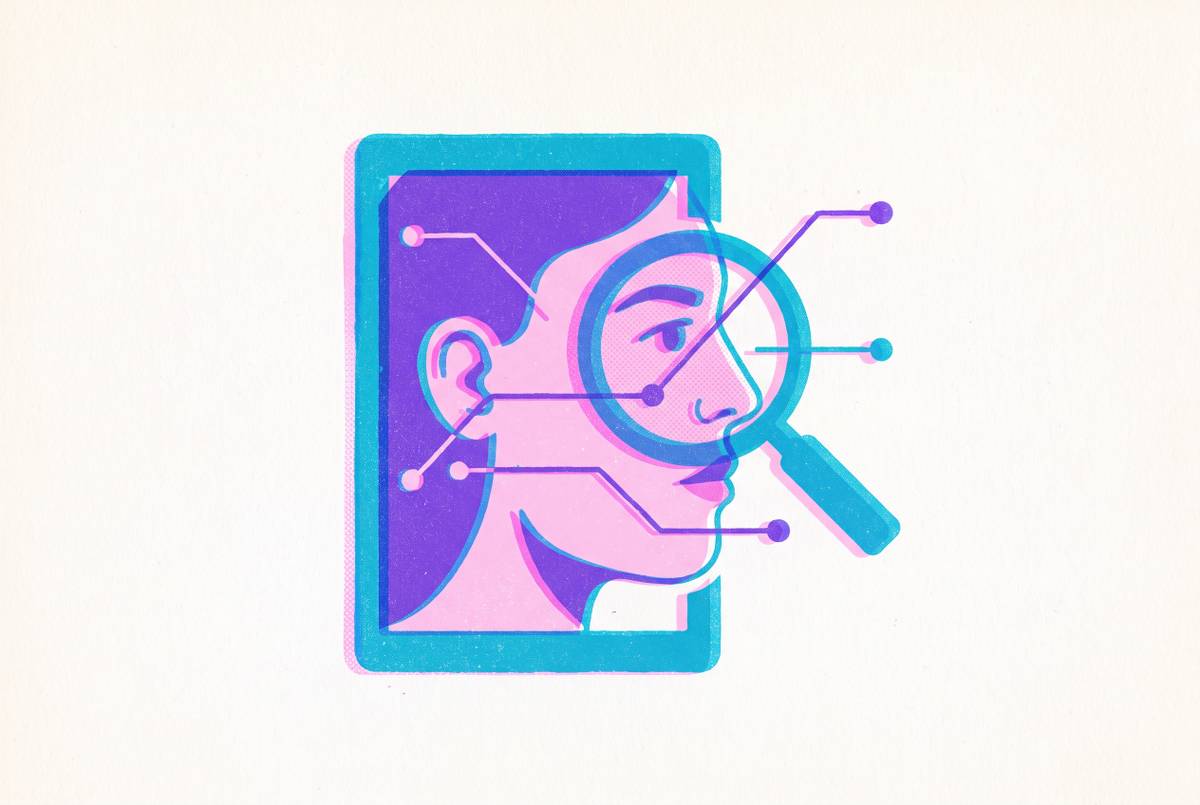
AI-guided intake separates some of that preparation from the clinical decision. It collects a patient-submitted image and structured symptom information, analyzes lesion characteristics and produces a routing recommendation. This pre-clinical screening pass produces an organized case with a proposed priority and direction. The distinction matters because sorting information is not the same as establishing what condition a patient has.
That screening pass can feed into a store-and-forward consultation, the main asynchronous model described here. A patient submits photographs and intake information, the AI screens and sorts the case, and a clinician reviews the submission independently before returning a written response. No synchronous appointment is required for that exchange. When the clinician reaches the case, the summary is attached and priority concerns are flagged. Lower-acuity submissions can be separated in the queue so that specialist review concentrates on cases that need it.
A structured summary brings the relevant information together rather than leaving the clinician to reconstruct it from an unorganized submission. The preliminary classification and triage level offer a starting point for review. The intake layer therefore changes the condition in which a case arrives. It does not remove the need to assess whether the information supports the proposed route.
Image quality is a constraint on this process. Only roughly half of patient-submitted photos meet clinical standards without guidance, so asking for an image is not enough. A blurred or incomplete photograph can mean asking the patient for another image, which can use up the time saved by preparing the case automatically. Research from the American University of Beirut Medical Center found that diagnostic concordance improved as image quality rose from unassisted patient photos to assisted photos to resident-taken photos. Intake must help patients take usable images and leave room for a clinician to judge whether those images are good enough.
How routing to the right level of clinician changes outcomes
The preparation helps with care when the case reaches the right person. An AI classification is useful only insofar as it helps that happen with less delay and better information. A low-acuity concern and a suspected higher-risk lesion do not make the same claim on specialist time. Treating them as though they do can slow access without improving care. Correct routing makes that distinction actionable.
When suitable low-acuity cases go to self-monitoring or GP review, specialists have more time for higher-risk disease. This is a way to increase the usefulness of existing clinical time without adding clinicians. Research presented at the European Academy of Dermatology annual meeting reported estimated savings of thousands of clinical hours among patients managed through an autonomous AI protocol. That finding illustrates the potential scale of time savings, rather than establishing what every AI-guided intake service will achieve.
The limits depend on the condition being assessed. Acne vulgaris, eczema, rosacea and contact dermatitis are well-suited to photo-based triage. Suspected melanoma, actinic keratosis and undiagnosed pigmented lesions are not appropriate for photo-only triage, because dermoscopy and biopsy remain essential. For those concerns, success means recognizing the need to escalate rather than trying to resolve the case within the image submission. The important outcome is therefore not how often the system supplies an answer, but whether its routing helps the patient reach an appropriate clinical assessment.
Where the human clinical decision remains non-negotiable
A routing recommendation must remain an input to clinical judgment. This boundary is part of the service’s governance. Someone must be responsible for deciding which cases the system can support and where its authority ends. The oversight model must also account for the risk of the condition being managed. Permission to help with one narrow type of care does not extend to handling every skin concern in the same way.
The Utah acne prescribing authorization shows how AI can work on its own under supervision within a limited area of care. Licensed clinicians agreed with the AI’s treatment recommendations in the vast majority of real-world cases, and the other cases needed small changes such as changing the strength of a topical medication. The stated reasons are the evidence that acne care is low-risk and the limited number of dermatologists available in Utah. Those conditions define the scope of the authorization rather than proving a general case for autonomous dermatology. Its governance lesson is that oversight can be structured around a limited task, but that structure would not apply unchanged to higher-acuity conditions.
Skindr uses store-and-forward care in which certified dermatologists review every image sent in, talk with patients, ask follow-up questions, write prescriptions and handle follow-up care. AI is not yet integrated into that model, although future iterations aim to use it for triage and assistance. The example is useful because it separates asynchronous access from AI autonomy. A service can remove the need for a live appointment while retaining direct clinician responsibility throughout, and adding AI does not by itself require changing that responsibility.
The bias problem that limits who AI intake works for
Human oversight also matters because AI skin tools inherit the limits of their training data, and the datasets that dominate the field are heavily skewed toward lighter skin tones. The International Skin Imaging Collaboration (ISIC) dataset, a widely used dermatology AI benchmark, has mostly light-skin images and only a small share of dark-skin images. Models trained on such data carry that imbalance into their outputs. Broad use does not make a dataset broadly representative.
The clinical concern is that AI tools may misclassify or miss diagnostic markers in darker skin tones. Patients with darker skin tones often present with skin cancer at later stages and with worse outcomes, so less reliable screening risks compounding an existing disparity. The 2026 Scientific Reports paper “Reducing skin tone bias in dermatology AI via sketch-guided multimodal fusion” found that training data imbalance undermines the reliability of AI-driven dermatology for global use. That limitation bears directly on routing, even when the system is not intended to diagnose. A screening error can still change which cases get attention.
This creates a tension in the access argument. AI-assisted triage promises particular value where access is limited, yet patients who depend on that access may be poorly represented in the data behind it. The response is not to abandon organized intake, but to improve training data and require escalation where the output cannot safely settle the route. Pigmented lesions and ambiguous presentations in diverse patients must go beyond the AI to licensed clinician review. Better representation and mandatory escalation address different parts of the problem, so neither should be treated as a substitute for the other.
What a well-designed AI intake experience looks like from the patient side
For the patient, the process begins with a form and photographs. The patient describes the concern, submits images and receives a clinician’s assessment after review. A complete intake covers the duration and location of symptoms, changes over time and associated symptoms, as well as relevant medical history and current medications. It also asks for high-resolution photos from multiple angles. These requests provide the substance of the consultation.
A well-designed experience helps the patient supply that substance. Photo guidance belongs at the point of submission, when it can improve what reaches the reviewer. The questions should also make clear what information the clinician needs about the concern. The patient does not need to understand how the system constructs its summary or assigns a preliminary classification.
What comes back should be the assessment of the licensed provider who reviewed the case. Depending on that assessment, the response may include a diagnosis, a treatment plan or a prescription. Conditions that can be managed through photo review and structured history include acne, eczema, rosacea, contact dermatitis, seborrheic dermatitis and hair loss. The patient need not decide in advance whether their concern belongs in that group, because determining suitability is part of routing. When classification is uncertain or a pigmented lesion warrants dermoscopy, the appropriate response is a clear referral that explains what happens next and why.
How to tell whether a platform's AI intake is clinically sound
A patient or referring clinician can ask whether a licensed clinician reviews every case before a diagnosis or prescription is issued, or whether the service operates under a defined staged-oversight arrangement. The Utah example makes the scope of such an arrangement important, because oversight designed for acne cannot simply be assumed suitable for other conditions. The service should also distinguish a routing recommendation, including possible diagnoses for review, from a final clinical conclusion. That distinction reveals whether AI supports the decision or quietly replaces it.
The next questions concern the quality of the handoff. A clinically sound platform guides image capture rather than merely requesting a photograph, and states how it handles low-confidence outputs. Escalation to a licensed clinician is the appropriate response to uncertainty. Condition-specific pathways support triage, because a service that sends every lesion through the same photo-only process is avoiding its central task. Data residency, HIPAA compliance and the handling of protected health information also need to be checked as basic requirements that every service must meet.
Nolla is one example of this architecture, with AI guiding symptom collection and image submission before a licensed clinician reviews the structured case summary and makes the clinical routing decision. Its AI role concentrates on organizing information rather than replacing the clinician’s judgment about where the case belongs.
The standard is the same for any platform making this promise. Its value depends on the quality of the information collected, the boundaries placed on automated output and the clarity of the route to human care. As these systems develop, faster intake alone will not be enough. AI intake earns its place by making the human clinical decision faster, better-informed and more accessible.