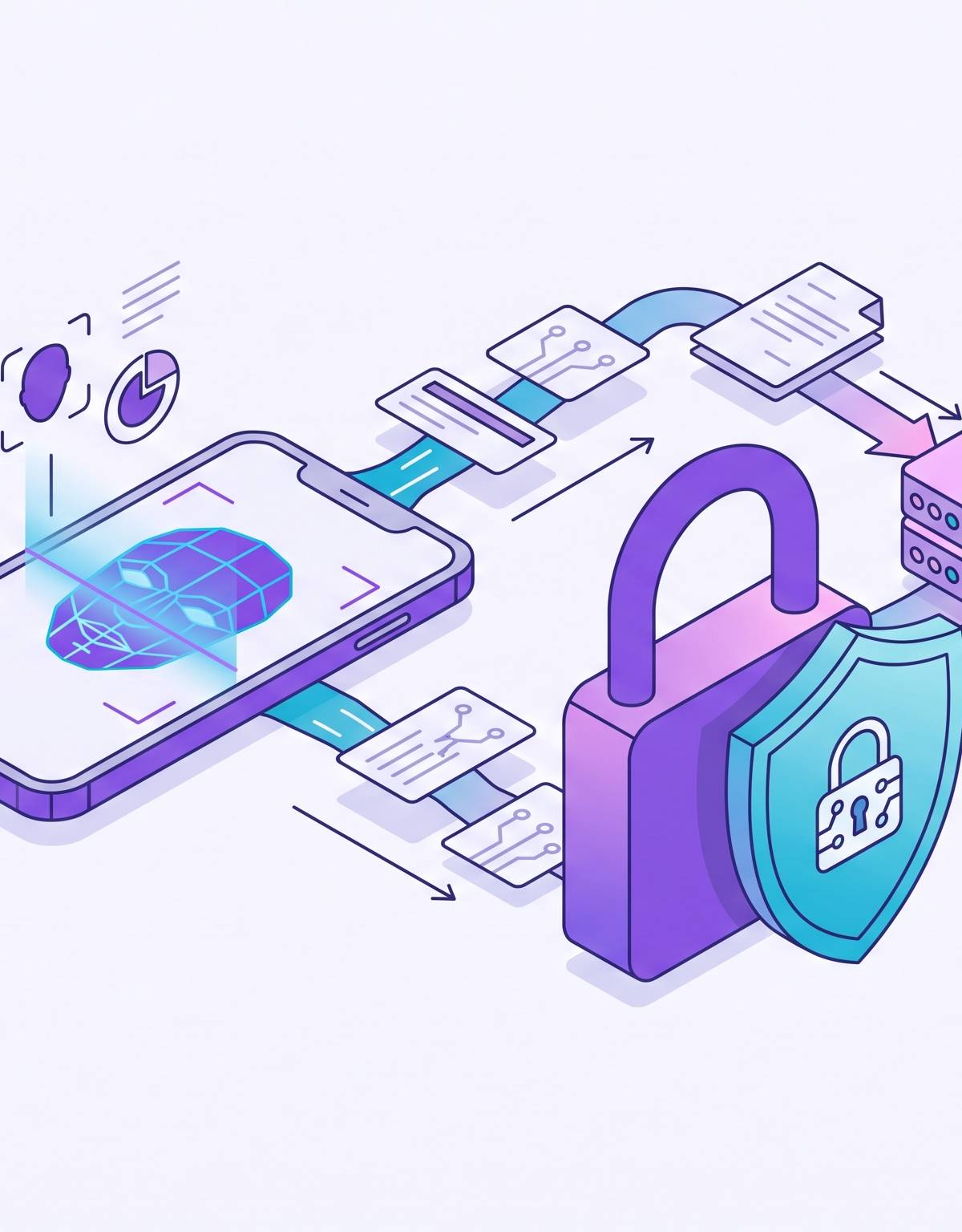
SkinVision Free Tier AI Analysis Reviewed
The AI's accuracy drops sharply in real-world testing compared to company claims.
Skin cancer is the most commonly diagnosed cancer group worldwide. The IARC estimated over 1.5 million new cases in 2022, with melanoma accounting for roughly 330,000 of those diagnoses and nearly 60,000 deaths. In the United States, the American Cancer Society projects about 104,960 new melanoma diagnoses in 2025, with around 8,430 deaths. Incidence has climbed roughly 42% since 2015.
The survival data is what makes this worth paying attention to. Melanoma carries a 94% five-year relative survival rate when caught early. More than 95% of skin cancers are successfully treatable before they advance. U.S. mortality has been falling roughly 2.8% annually from 2014 through 2023, a trend researchers largely attribute to immunotherapy and earlier detection.
That gap between early-stage and late-stage survival odds is the entire clinical rationale for screening tools. It is also why the actual accuracy of any given tool matters practically, not academically. An app that generates false reassurance is not a neutral artifact. It occupies the space where a real decision should have been made, and that is a specific kind of harm.
What the Free Tier Actually Gives You, and What It Withholds
The app is free to download. That sentence is accurate and also quietly misleading.
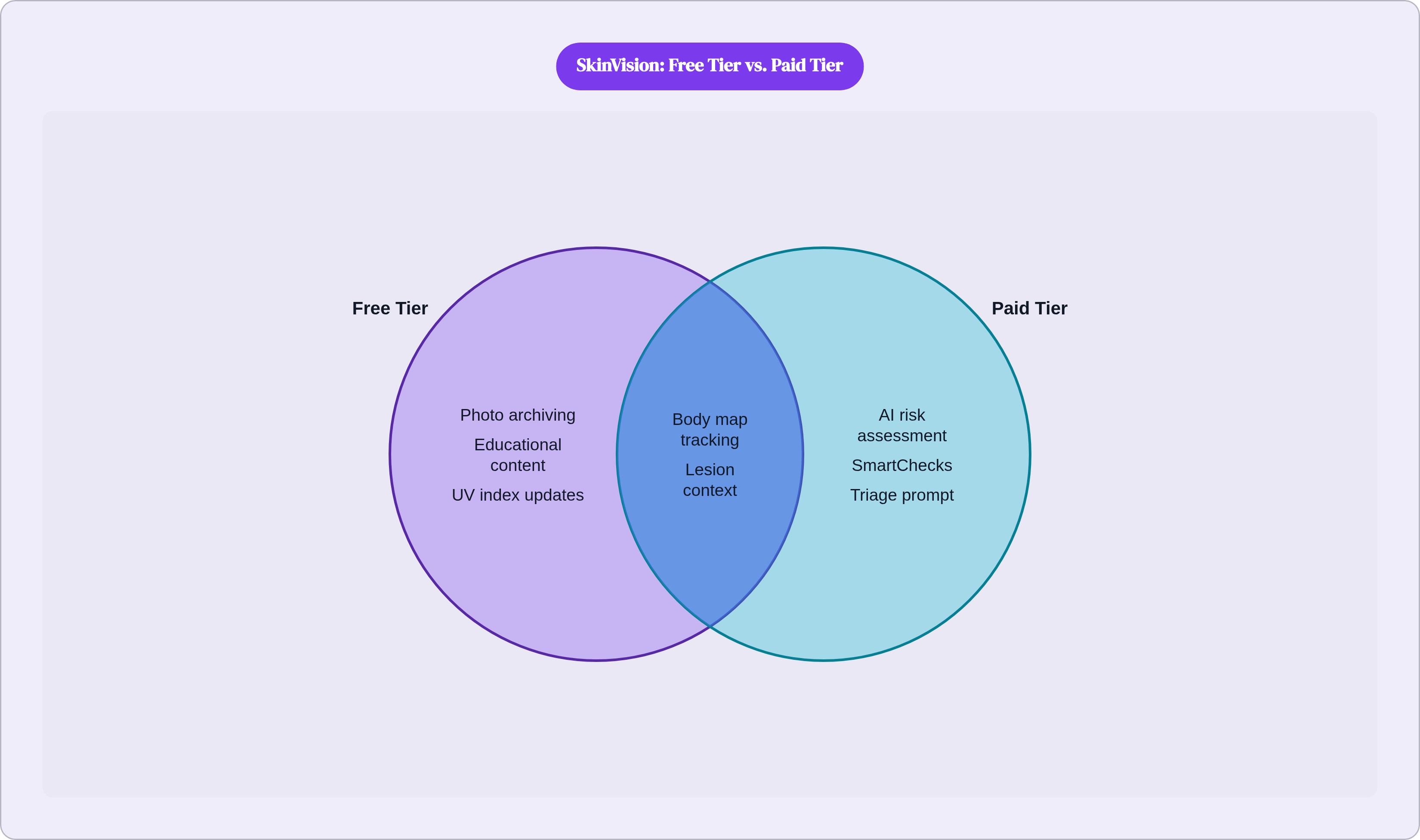
Free access includes photo archiving on a body map, educational content about skin lesions, and local UV index updates. The archiving is the genuinely useful piece. It reflects behavior dermatologists actually recommend: building a longitudinal visual record so that changes become visible over time rather than reconstructed from memory. But stored images under the free tier are not reviewed by anyone. No clinician sees them. No algorithm touches them.
The AI risk assessment is paywalled. SmartChecks and StandardChecks require either a single-use payment, roughly €10 to €25, or an annual subscription in the €50 to €100 range. If you carry insurance through one of SkinVision's partnerships with UK, Australian, German, Dutch, or New Zealand insurers, check that before paying out of pocket.
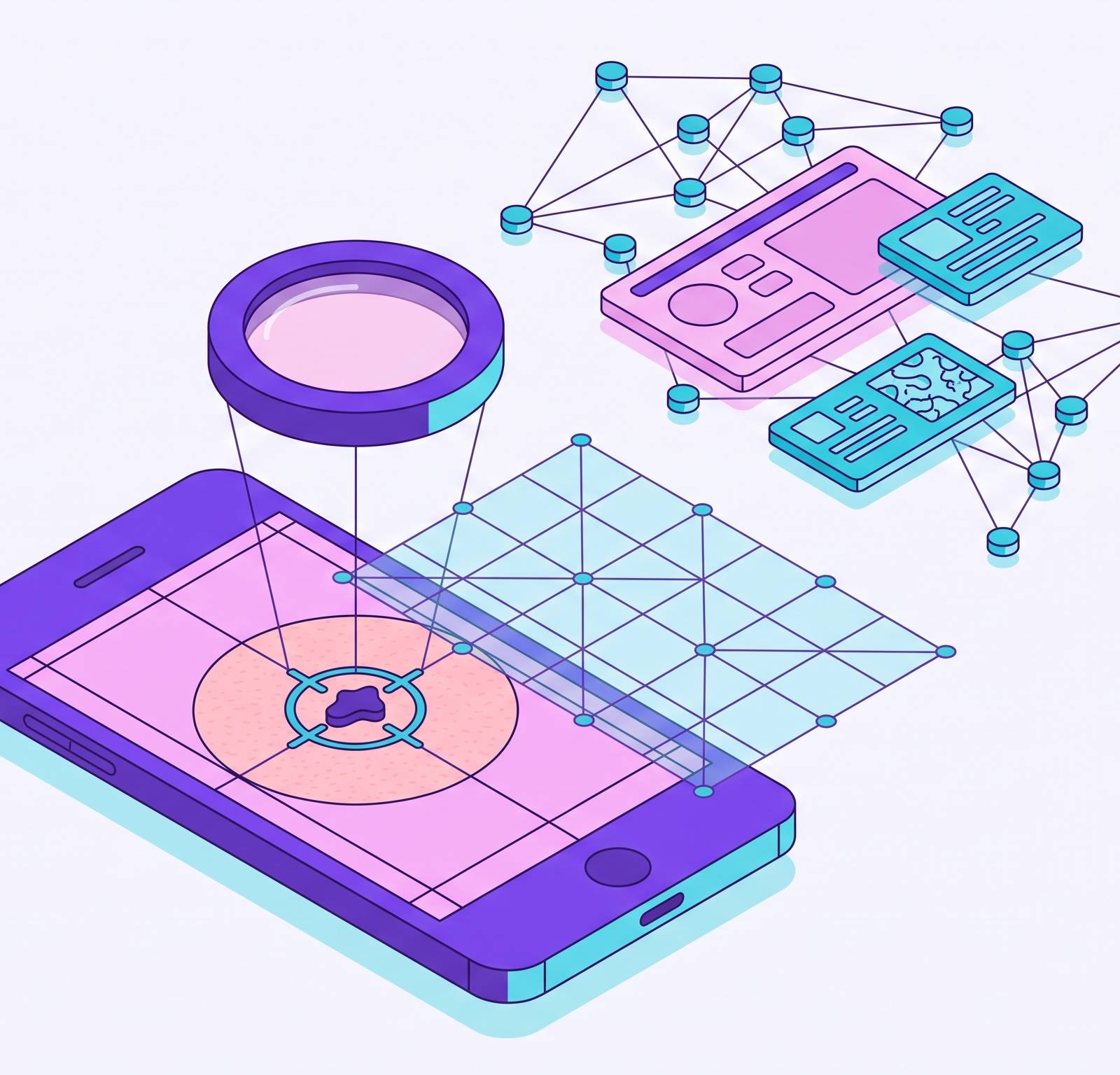
When you do pay, the workflow is straightforward: mark the lesion on your body map, photograph it with AI-assisted framing guidance, add symptom context, and the algorithm returns a result within seconds. The output is binary. Either the lesion is low risk with a prompt to recheck in three months, or you are told to seek clinical assessment. No probability gradient. No middle tier.
What gets marketed as AI skin analysis is the paid feature. The free tier is a photo diary with educational content. Both descriptions are accurate. They are not equivalent, and knowing the difference matters if you want to understand what the clinical literature is actually evaluating.
How the AI Behind the Paid Check Actually Works
SkinVision's algorithm was trained on over two million labeled skin lesion images, using convolutional neural networks: models that learn statistical relationships between visual features and diagnostic categories through supervised training on labeled data. It does not reason about your skin the way a clinician would. It finds patterns that correlate with known outcomes in its training set.
Image quality is one of the most significant variables in how that plays out in practice. Magnification, brightness, the presence of a scale marker in the frame: all of these shift model outputs meaningfully. The system decides based on what it can see, and what it can see depends entirely on how the photograph was taken. Clinical metadata like patient age and risk history is technically available to the model, but image data dominates. At its core, this is pattern recognition applied to a smartphone photograph taken by a non-specialist.
The output is a risk classification, not a diagnosis. That distinction carries clinical and legal weight. Under EU regulatory frameworks, clinicians retain ultimate responsibility for decisions made using AI-assisted tools. SkinVision's CE Class IIa medical device classification means it passed regulatory scrutiny under EU standards for medical devices. But regulatory clearance is not the same thing as demonstrated real-world accuracy across diverse populations. Treating those two things as interchangeable is a category error that matters.
What SkinVision's Own Validation Studies Show, and Where Their Limits Are
The largest validation study, Sangers et al., published in 2022 in the journal Dermatology in partnership with Erasmus Medical Center, underpins the figures SkinVision publishes most prominently: 87% sensitivity for identifying pre-malignancy in at-risk users, 92.1% sensitivity for malignant melanoma, 98.6% for squamous cell carcinoma, and 80.1% specificity.
Read the authorship disclosures. The Erasmus MC Cancer Institute received an unrestricted research grant from SkinVision to conduct this study. Two lead researchers serve on SkinVision's scientific advisory board and hold equity in the company. None of that is hidden; it is disclosed in the published paper on PubMed. Disclosed conflicts do not automatically invalidate findings. What they do is limit the independent weight those findings can carry when they constitute the primary evidence base for a commercial product.
For calibration: a 2025 review across a large body of studies found that convolutional neural networks achieve 91% sensitivity and 94% specificity distinguishing melanoma from benign lesions under controlled conditions. SkinVision's figures sit within that range, toward the lower bound. The company's own affiliated research is the dominant peer-reviewed evidence for the product's performance. Independent replication is limited, and where it exists, the results are less favorable.
What Independent Research Finds When It Tests SkinVision
Independent prospective studies complicate the picture. One found the app classified significantly more lesions as high-risk than dermatologists would. At scale, that pattern generates a clinically problematic volume of unnecessary excisions, procedures that carry real costs: anxiety, scarring, and the erosion of patient trust in triage tools over time. A separate prospective trial found low sensitivity and specificity specifically for melanoma classification, a direct conflict with the company's headline figures.
The most honest explanation for these discrepancies is not that one research group is right and the other wrong. Patient mix and lesion preselection differ substantially between company-sponsored validation studies and independent prospective trials. The same algorithm produces very different accuracy numbers depending on the composition of what it is tested on. A validation study can be internally sound and still fail to predict real-world performance if the test population diverges meaningfully from actual users.
Accuracy figures are not properties of an algorithm. They are properties of an algorithm applied to a specific population under specific conditions. The gap between those conditions and your actual skin, photographed on your phone, in your bathroom, is where most of the uncertainty lives. That is the part most reviews skip past.
Who the Tool Underserves: The Skin Tone Gap
SkinVision's primary validation data comes predominantly from European populations with lighter Fitzpatrick skin phototypes. This is not a failure unique to SkinVision's researchers. It reflects a structural problem running through AI dermatology at large.
The ISIC archive, one of the most widely used training datasets in the field, did not include individuals with mid-to-darker Fitzpatrick phototypes in a key prospective diagnostic accuracy study. When training data skews toward lighter skin, models learn to recognize patterns in lighter skin more reliably. The consequence is documented, not theoretical: AI models trained predominantly on lighter skin tones show measurably lower performance for lesions on darker skin.
For users with darker skin tones, the accuracy figures SkinVision publishes, already qualified by conflict of interest disclosures and limited independent replication, become even less applicable. The validation population does not represent them in meaningful numbers. The evidence base does not speak to their experience of the product.
The populations with the least historical access to dermatology care are also the populations for whom these tools are least validated. That is not an incidental oversight. It is a compounding inequity, and it deserves more than a paragraph.
What the Free Tier Is Useful For, and Where It Stops
The free tier's photo archiving does one thing well: it builds a visual record over time so that changes become visible rather than reconstructed from imperfect memory. That habit has real clinical value. Dermatologists recommend it. The app supports it more consistently than a camera roll and a good intention.
The educational content is also worth something specific. Patients who arrive at a clinical appointment with organized photographs and some working vocabulary for describing lesions get more productive consultations. That is a real, if modest, benefit.
What the free tier cannot do is assess risk. It cannot flag concerning lesions or perform anything resembling triage. That function is entirely behind the paywall, and no version of the free product approximates it.
The paid check is most defensible for users in SkinVision's validated markets, primarily European users with lighter Fitzpatrick skin phototypes, who want a fast first-pass signal on a specific lesion and who understand that a low-risk result means "recheck in three months," not "you are fine." The triage prompt only works if you act on it. A "see a doctor" output should produce an appointment, not a second algorithmic opinion.
What to Do When SkinVision Isn't the Right Fit, or Isn't Enough
For US and Canadian readers: SkinVision does not support these markets. That closes the question before it opens for a large share of people likely reading this.
For anyone who receives a high-risk result from the paid tier: the correct next step is a clinician. Not a second app. The value of a triage signal is that it creates an actionable prompt. Seeking more algorithmic reassurance rather than a clinical appointment is precisely the wrong response.
For readers who want AI-assisted skin assessment with clinician oversight built into the structure, the relevant model is asynchronous telehealth: AI analysis reviewed by a licensed provider before any result reaches you. That closes the oversight gap that standalone consumer-facing AI tools leave open. Nolla operates on this model, using large multimodal models trained on clinical cases with licensed clinician review of outputs, and offers message-based consultation at a price point that competes with SkinVision's per-check pricing. For US-based users, or anyone who wants the human role made explicit, it is a structurally different approach to the same underlying need.
Whichever tool someone uses, or whether they use one at all, the foundation is behavior. Visual self-checks every three to six months. Knowing your baseline. Noticing what has changed. Acting when something shifts. Platforms can support that foundation. None of them replace the clinical relationship that a concerning finding actually requires.