Getting an Online Skin Diagnosis When You Want AI Analysis and a Clinician's Final Word
AI screening speeds diagnosis, but a clinician's judgment interprets what the photos actually mean.

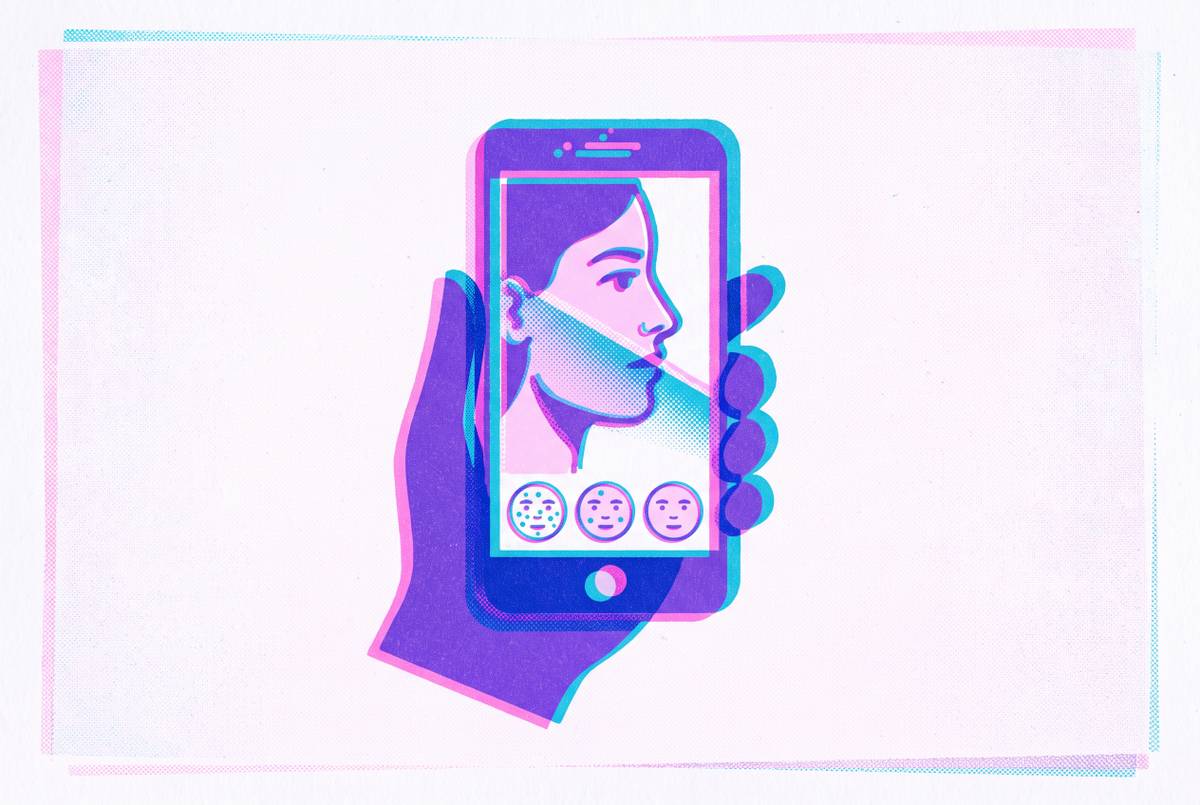
An online skin diagnosis that combines AI analysis with a licensed clinician’s final review follows a defined workflow: you submit photos and medical history, AI helps screen and organize the case, and a clinician reviews the evidence and provides an assessment and plan. Its value lies in timely clinical judgment, with clear limits on what photographs can settle.
Why getting a timely dermatology opinion has become genuinely difficult
The 2022 Merritt Hawkins survey of physician offices across 15 major metropolitan areas found that non-urgent dermatology appointments in the United States took many weeks, with longer waits in underserved regions. A 2026 study in Clinics in Dermatology found that the median wait for suspected skin cancers at U.S. academic centers was more than 70 days. For someone trying to decide whether a skin change needs attention, the delay leaves an important question unanswered.
Uninsured visits cost well into the hundreds of dollars, while high-deductible plans can make preventive skin exams unaffordable until the deductible is met. Having insurance is not the same as having usable access. Together, these barriers created room for a different first step, one that could bring a clinician’s judgment to a patient without requiring an office appointment.
What store-and-forward teledermatology actually is, and why it became the structural backbone of online skin diagnosis
Store-and-forward teledermatology, usually shortened to SAF, separates submitting a case from reviewing it. A patient uploads high-resolution photos and a written medical history, then a clinician responds with an assessment and plan. Neither needs to be available at the same time. That separation removes scheduling friction and avoids the connection-speed demands of a live video appointment. Evidence also shows that it is cost-effective, especially when used for triage in rural areas.
Dr. Elizabeth K. Jones of Thomas Jefferson University Hospital described three main models at the 2025 American Academy of Dermatology Meeting, namely SAF, live video, and hybrid care combining both. A University of Pennsylvania study she cited found that SAF triage reduced in-person visits and emergency department visits in an underserved Philadelphia community. Here, two uses of “hybrid” need separating. Photo-plus-video care combines communication channels, while AI-plus-clinician care combines machine analysis with professional judgment. SAF provides the structure for the latter, though full-body exams, genital concerns, and lesions needing biopsy still require physical access.
Where AI enters the workflow and what it is actually doing
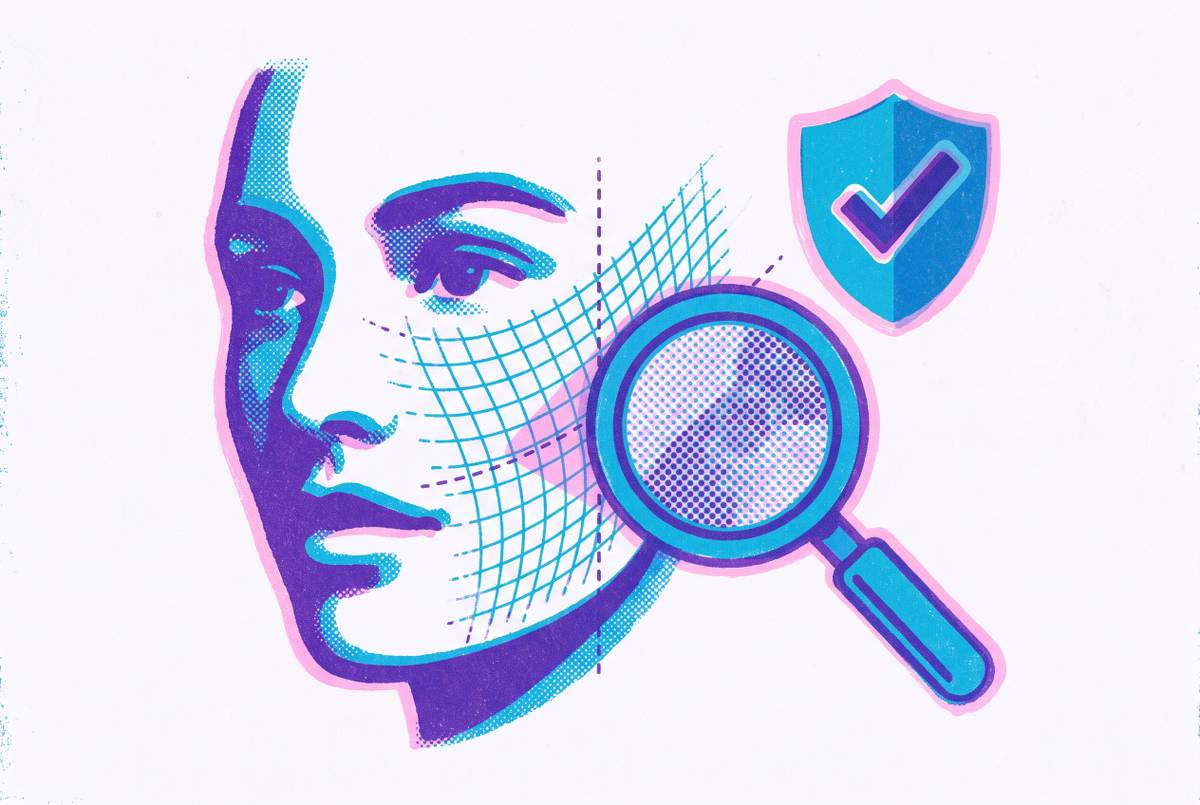
In that structure, AI helps with pre-screening and triage. It analyzes uploaded images for patterns associated with skin conditions and can flag high-risk features, including lesion characteristics associated with malignancy. It can also help organize intake by assessing image quality, tagging symptom descriptions, and structuring the case for review. The licensed clinician still has to judge what the images and history mean together.
How capable is that first layer becoming? Early convolutional neural networks, or CNNs, were narrow and task-specific, while newer foundation models are broader and more flexible. SkinGPT-4 illustrates a different function by combining image recognition with a language model to generate differential diagnoses and treatment suggestions in conversational language. It was designed as an interactive system capable of autonomous recommendations. That research does not show which tools a given service uses or whether a clinician has approved the advice a tool produces on its own. A model’s capability and a clinical platform’s review process are separate questions.
Which skin conditions this workflow handles well, and which still require an in-person visit
Common chronic conditions offer some of the clearest evidence for remote care. A study of the SkinTracker mobile app found that remote atopic dermatitis assessments had intraclass correlation scores of 0.90 to 0.96 compared with in-person results, indicating very close agreement. A retrospective study at the University of Pittsburgh Medical Center found that rosacea was managed much the same way through asynchronous consumer-to-physician care as through office visits. The same group’s study in JAAD International found similar outcomes for remote and in-person isotretinoin management for moderate-to-severe acne. These findings support remote management of specific conditions.
The boundary depends on what needs to be examined. People still need in-person care for full-body skin exams and concerns about genital or sensitive areas. A photograph may also flag a lesion that needs biopsy, but it cannot provide tissue confirmation. In that situation, identifying the need for an office visit is a useful result.
How photo quality and submission details shape what the clinician can actually assess
The clinician’s assessment depends heavily on the information received. Diagnoses based on images sent by patients tend to agree less often, and with more variation, than those based on images sent by clinicians. In the American Academy of Dermatology’s early survey data, dermatologists said photo-plus-video models were the most accurate because they used both photos and video. For patients, the practical lesson is to treat the photos and written history as parts of the same submission.
Use natural light rather than flash, which can flatten texture and wash out color differences. Take a straight-on photo and at least one side view to show elevation or depth, with a reference object such as a coin in one image to convey size. Keep the skin visible and unobstructed. Remove makeup, lotions, or bandaging if it is safe to do so.
Describe where the problem appears, how widely it is spread, whether it itches, burns, or hurts, and how long it has been present. Note changes over time and anything that makes it better or worse, including heat, stress, products, or time of day. Include all topical products used on the area, recent medication changes, and family history of eczema, psoriasis, or skin cancer. Those details help the clinician make sense of the pattern in the photo alongside the patient’s history.
The specific AI limitation patients with darker skin tones need to know about
Current dermatology AI tools perform measurably less accurately on darker skin tones. Patients in Fitzpatrick categories IV–VI deserve to know this before relying on an automated result. Underrepresentation in training data is a central cause. A 2025 study evaluating ChatGPT-4o found significantly lower melanoma sensitivity, specificity, and accuracy for darker skin tones, defined in that study as Fitzpatrick types III–VI, than for lighter tones. This is a clinical risk because missed melanoma can delay early detection.
More representative training data can improve that performance. The Stanford Diverse Dermatology Images dataset, known as DDI, contains a majority of skin-of-color images, and incorporating it into training significantly improved accuracy, nearly equalizing performance between light and dark skin tones. Dr. Veronica Rotemberg of Memorial Sloan Kettering Cancer Center is among researchers emphasizing that dermatology AI must work for all skin types and ages. As of 2026, these tools still need careful testing across a range of skin types.
Regulatory work also recognizes the problem, though it has limits. The FDA is looking into skin tone criteria to help AI devices work better for people with different skin tones. The EU AI Act’s high-risk obligations, effective from December 2027 for Annex III and August 2028 for Annex I, include broad requirements for representative datasets. They do not explicitly formalize validation requirements by skin tone. A regulatory direction is not the same as evidence about the tool assessing a particular patient.
Why the licensed clinician's review is the non-negotiable element, not an add-on
Because of those limits, a clinician needs to review the case as a required part of the workflow. A clinician assesses the image against symptoms, medications, family risk, and the rest of the history. The task includes ranking possible diagnoses by both likelihood and clinical risk, then deciding whether treatment, further testing, urgent referral, or biopsy is appropriate. The final decision has a responsible professional behind it. A licensed clinician’s sign-off has legal and ethical weight that an algorithm’s output does not.
Patient trust reflects this distinction, although trust alone cannot establish accuracy. A May–June 2025 randomized controlled vignette trial among Dutch adults, published as a JMIR preprint, found significantly higher trust in AI-plus-teledermatologist advice than AI-only advice. Trust fully mediated the effect on adherence, linking confidence in the source with willingness to follow treatment. The study involved hypothetical advice.
The structure also resembles established clinical supervision. Asynchronous review allows independent formulation of a differential diagnosis and management plan before discussion with a supervising clinician. In AI-assisted care, the clinician’s role likewise goes beyond endorsing a suggested label. It turns pattern recognition into an accountable decision about care.
What the result of a hybrid consultation actually looks like and what to do with it
A useful consultation returns an assessment or differential diagnosis, a treatment plan, and an escalation path. The assessment names the most likely condition and, when needed, other possibilities. The plan explains what to apply, how to use it, and when improvement is expected. It should also explain when the patient needs in-person care. For an ambiguous or high-risk lesion, this remains a clinical assessment from photographs.
The treatment details should connect an action to its purpose. The American Academy of Dermatology and the Acne and Rosacea Society recommend first-line topical retinoids for acne vulgaris, while a plan should also address post-inflammatory hyperpigmentation and scarring where relevant. Rosacea treatment depends on the features present. Topical brimonidine reduces persistent redness by constricting superficial vessels for hours. The global ROSCO panel identifies high-certainty evidence for topical azelaic acid and topical ivermectin for inflammatory lesions.
For atopic dermatitis, the explanation should address barrier dysfunction and individual triggers as well as topical management. Relevant trigger categories include detergents, synthetic fabrics, temperature extremes, and stress. Understanding the treatment’s purpose helps patients use it correctly and describe a poor response meaningfully. A platform that accepts updated photos at a stated interval can support that follow-up without another full appointment. The quality test is completeness, including both what to do next and when new symptoms, lack of improvement, or a concerning feature require escalation.
The equity gap this model has not yet solved
Asynchronous care reduces some access barriers without removing them all. It is less demanding than live video, but patients still need usable technology and the skills to submit a case. People without reliable internet access, smartphones, or digital literacy may be excluded from its gains. This creates a difficult contradiction. The patients facing the longest office waits may also struggle to use the alternative designed to shorten them.
In the United States, how soon someone can see a specialist can depend heavily on zip code, and that inequality carries over to digital services unless access to technology improves too. Skin tone bias makes this harder because patients who are underrepresented in training data may also have fewer chances to see specialists in person. Uneven digital access and the absence of culturally responsive models can therefore deepen existing gaps. Diverse datasets, regulatory pressure, and research in underserved settings are active corrective efforts. These efforts are still underway and have yet to show that people have equal access.
How do you choose an online skin consultation with AI and a real dermatologist?
Choosing an online skin consultation starts with checking whether a licensed clinician reviews every case and approves the final plan, including any prescription. A service describing AI analysis has not yet answered that question. If the service promises a dermatologist, look for clear details of their state licensure and board certification. Miiskin’s national survey found that roughly three quarters of patients said it was important to see a board-certified dermatologist.
A response window of 24–48 hours is achievable with current platforms, but speed alone is insufficient. The assessment should include a treatment plan, an escalation path, and a way to submit follow-up images at a stated interval. HIPAA compliance and end-to-end privacy protections are baseline requirements. A quick answer without those clinical and privacy safeguards is an incomplete service.
The best fit is a service whose process matches the condition and makes its limits plain. That means distinguishing AI pre-screening from clinician judgment and an online assessment from a biopsy-confirmed diagnosis. It also means knowing who is responsible for the answer. For a condition that suits online care, it is often more useful to compare timely advice reviewed by a clinician with weeks without guidance than to compare online care with an ideal appointment available right away.
Sources
- AI and Digital Tools in Dermatology: Addressing Access and Misinformation
- Patient perceptions of artificial intelligence integration in dermatology: a cross-sectional study of trust, comfort and equity across multiple care modalities
- JMIR Dermatology - Store-and-Forward Images in Teledermatology: Narrative Literature Review