How Clinician-Reviewed Online Consultations Bypass the Dermatologist Queue
Clinician review of AI-sorted cases cuts wait times without automating diagnosis.
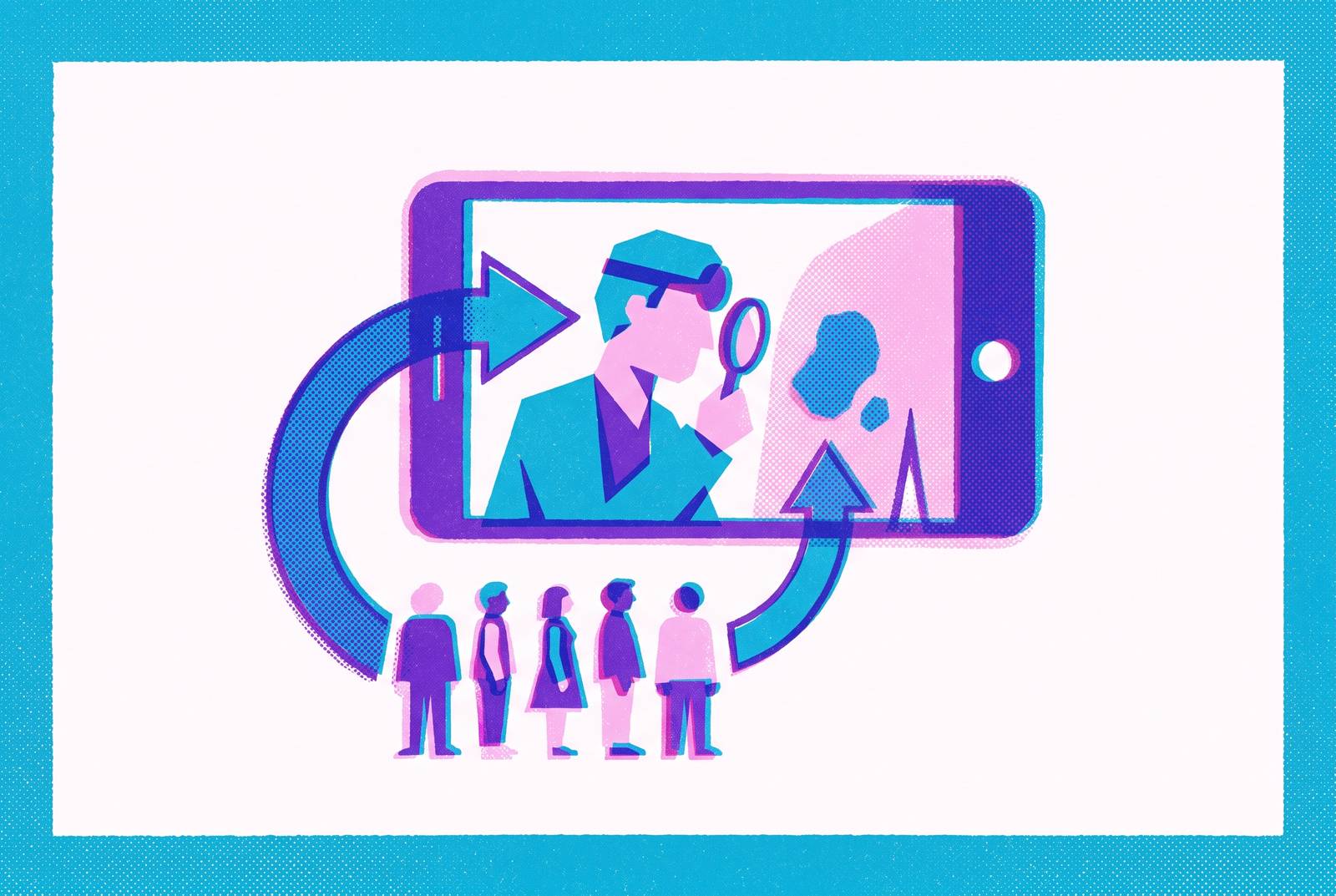
Clinician-reviewed online consultations bypass the dermatologist queue by separating information gathering from medical judgment. In Nolla’s AI-assisted model, a licensed clinician reviews the case and approves treatment before any prescription is issued. The key to trustworthy AI-assisted teledermatology is mandatory clinician sign-off, with in-person care when remote assessment is not enough.
Why the dermatology queue is a structural problem, not a scheduling inconvenience
A London patient with cystic acne waited nearly a year and a half from referral to clinician. None of the 17 London NHS hospital trusts met the government's target of seeing 92% of dermatology patients within 18 weeks. London's average dermatology wait more than doubled from six weeks in 2014 to 14 weeks in 2026. The British Association of Dermatologists' 2024 workforce report found demand “outstripping” capacity.
The shortage also reaches beyond one health system. The Canadian Dermatology Association estimates a national shortfall of 465 dermatologists, with average waits of at least five months and waits reaching up to two years in some rural or remote regions. Skin conditions are among the most common reasons people seek care, and referrals are rising year on year. Yet the specialist workforce is too small and unevenly distributed to meet that demand. Cosmetic procedures also take up time that dermatologists could spend on medical skin concerns.
The US example shows what happens when that mismatch becomes severe. UNM Hospital sent providers a memo citing a “critical shortage of dermatologists,” with new-patient wait lists reaching one to one-and-a-half years and the department accepting only urgent referrals. At that point, finding a better appointment slot is not a sufficient answer. Access depends on changing which cases enter the specialist queue and how those cases are reviewed.
What the queue is actually doing with a specialist's time — and what it doesn't need to
A specialist's calendar has time set aside for more than complex diagnosis and treatment. It also has time for gathering information, arranging care and seeing patients to rule out serious disease. Many lesions sent for review turn out to be benign, though finding that out is important clinical work. The inefficiency is that the referral model often reserves the same kind of live encounter for cases with very different needs.
For many common skin concerns, an assessment needs a clear image, symptom history and the parts of the patient's medical background that may matter. Those details can be gathered without the specialist and patient having to be available at the same time. In asynchronous services, including Nolla's AI-assisted intake model, that work happens before clinician review. The clinician then receives a collated case rather than starting the information-gathering process during an appointment. This separation removes coordination overhead while preserving time for clinical judgment.
How store-and-forward teledermatology separates information gathering from specialist review
Store-and-forward teledermatology gives that separation a practical form. The patient submits their chief complaint, symptom history, medical background and close-up images through a HIPAA-compliant platform. A provider looks over the material later and finishes the encounter without interacting with the patient in real time. Because the two people do not need a shared appointment slot, the encounter avoids the risk of a patient missing a scheduled visit. It also reduces the need to travel to the reviewing specialist.
Dermatology is well suited to this approach because much of its diagnostic information is visual. For common presentations, a clear, well-lit image can carry much of what the clinician needs to see, while the history supplies context. That does not make every photograph sufficient or every skin concern suitable. The quality of the submitted case is part of the care itself.
The evidence supports store-and-forward as a way to reduce waits. Outcomes from clinician-submitted images can be comparable to those from in-person visits, though that finding does not establish that every patient-submitted image will be adequate. Presbyterian Healthcare in New Mexico provides a concrete example of remote review connected to physical care. It expanded teledermatology to Plains Regional Medical Center in Clovis, and dermatologists can evaluate Albuquerque patients while they are at home. When a biopsy is needed, it can be arranged through Presbyterian facilities, so remote assessment becomes an entry point for in-person care.
Where AI fits in the async model — and where it doesn't replace the clinician
AI adds a triage and decision-support layer to this existing model. Here, AI means tools for lesion detection, image classification and clinical decision support. These tools find patterns in labeled clinical data and help put the information in order before a clinician reviews it. AI-guided symptom capture and image guidance can also make intake more complete. Missing information can eat into the time saved by doing away with the live appointment.
Nolla uses large multimodal models and image-processing models that were trained on millions of labeled clinical cases. This is purpose-built clinical AI rather than a general-purpose tool asked to improvise a skin assessment. Its role is to surface pattern information for a licensed clinician to interpret. Once structured intake is done, AI-assisted platforms can allow a patient to get a diagnostic opinion and prescription in under 15 minutes instead of waiting weeks for a 30-minute appointment slot. That capability varies by patient and presentation.
The limits explain why interpretation still matters. Training datasets often emphasize common conditions, including psoriasis, eczema and melanoma, without representing the full range of skin types or rare presentations. Differences in how images are taken can lead to errors, and accuracy can fall for early-stage disease. General large language models also perform inconsistently across conditions and do not reach the diagnostic performance of experienced dermatologists. A useful pattern match therefore needs to be weighed before it can guide a clinical decision.
Does a real clinician review the AI findings before approving treatment
Mandatory clinician review is what completes the model. A licensed clinician looks at the images, patient history and AI output, then makes and takes responsibility for the clinical decision. The reviewer can weigh whether image quality weakens a suggested classification or whether the history points somewhere the AI has missed. They can also decide that the case exceeds what can safely be assessed remotely. That decision is a successful use of online triage.
The same responsibility applies to prescribing. A treatment plan follows from the clinician's assessment of the whole case, including prior treatments and current medications. The licensed provider's name is attached to the assessment and any prescription. In Nolla's model, clinician oversight is a design principle, with AI supplying information and a licensed clinician delivering the assessment. The distinction for a patient is between AI-assisted care with mandatory sign-off and an automated output presented as if it were medical care.
It is reasonable to ask how this saves time if a clinician still reviews every case. The clinician starts with information already in order, so there is no need for a shared appointment or to go through intake again live. For a benign lesion or straightforward acne case, the time used by a single traditional dermatologist encounter could serve three patients through asynchronous review. Simple cases can be seen through that route, leaving specialist appointments for cases that need them.
Which skin concerns are the right fit for an online consultation
Everyday skin concerns that can be assessed through history and visual examination are often a good fit. Acne is one example, including inflammatory and comedonal acne and concerns about post-inflammatory hyperpigmentation. Eczema or atopic dermatitis flares can also fit, with established management plans that may be renewed remotely. Contact dermatitis, tinea and rosacea are further examples where images and history can support assessment. Suitability for online management still varies among cases within these categories.
Online intake can also give patients room to explain a longer story. People with chronic spontaneous urticaria wait an average of approximately two years for a diagnosis after first seeking care, so a faster triage route could be especially helpful. Skin concerns with a psychological dimension, including stress-exacerbated pruritus, may benefit from space to write out the history.
The boundary is whether the clinician has enough information to make a safe determination. Conditions requiring biopsy, hands-on examination or immediate intervention belong in person. Systemic red flags or suspected malignancy that cannot be ruled out visually also require in-person assessment. Patients do not have to settle those clinical questions before asking for help, but online care should not delay urgent care. Clear, well-lit photographs help the reviewer, and a good platform guides patients in documenting their concern.
What a clinician-reviewed online consultation actually produces — and what treatments are available through it
The output should be a care plan that includes the clinician's assessment of the submitted images and history, with a treatment recommendation or prescription where appropriate. It also explains how to follow the treatment and when to seek in-person care if the condition changes or does not respond. Instructions are part of the clinical work because a plan the patient cannot understand is difficult to use. The medium changes, but the treatment should still rest on the clinical standards used in person.
For acne, the American Academy of Dermatology's guidelines give topical retinoids a strong recommendation as first-line therapy. These include tretinoin, adapalene, tazarotene and trifarotene. Tretinoin also has evidence for improving post-inflammatory hyperpigmentation. These are treatment options a clinician may consider after reviewing the individual case. Online prescribing still requires that individual judgment.
Benzoyl peroxide is recommended in all antibiotic-containing acne regimens to prevent antibiotic-resistant C. acnes. There is evidence that azelaic acid helps with both active acne and post-inflammatory hyperpigmentation, so it may be an option when both are present. Naming these options makes clear that an online consultation can lead to established medical treatment rather than general skin care suggestions. Which treatment is appropriate depends on the clinician's reading of the history, images and previous treatment.
Isotretinoin requires a different discussion because it is subject to the iPLEDGE program. The iPLEDGE requirements restrict certain testing steps while allowing telehealth prescribing. Patients with severe nodular or cystic acne need a clear way to get the required assessment and monitoring, including care in person when needed. A simple message-based consultation should spell out those limits. For patients who want to start that way, Nolla's message-based consultation with a real clinician costs $39.
How to decide whether an online consultation is the right first move for your skin concern
For a common, visual and describable skin concern, an asynchronous consultation can be a practical first step when there are no systemic symptoms or acute distress. It does not require the patient to know the diagnosis in advance. The clinician's job includes deciding whether the case sent in can be treated through remote care. If the assessment calls for a biopsy, procedure or hands-on examination, the next step is in person. A rapidly changing presentation that cannot wait should not be held for an online response.
Choosing the service means looking at the process as closely as the promised speed. Good online care gathers symptom and medication history, gives image-quality guidance and requires a licensed clinician to review every case before treatment is approved. It then provides an understandable care plan with clear next steps if the concern evolves. An instant answer without that information is not the same service, however polished the interface may be.
For readers looking for a concrete option, Nolla offers AI-assisted intake and clinician-reviewed assessment through a message-based consultation. The larger choice is a route into care where a clinician can either treat the concern remotely or explain why it needs more.