Which Online Dermatology Platforms Require a Physician to Countersign Every AI-Flagged Prescription
State laws, not platforms, determine what oversight dermatology AI prescriptions require.
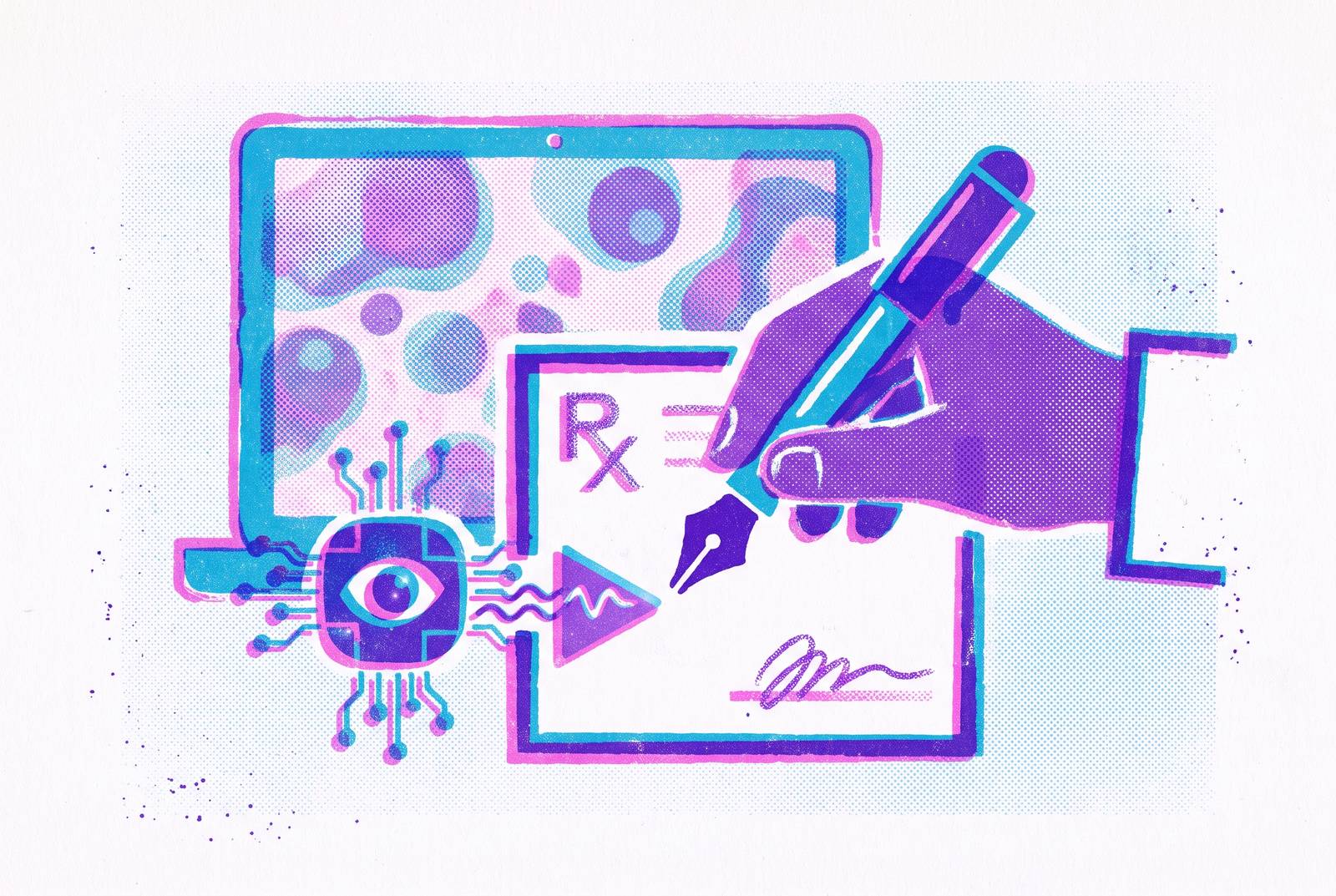
AI-assisted telehealth dermatology with clinician review uses software to support assessment while a licensed clinician authorizes the prescription. There is no single federal rule requiring a physician to countersign every AI-flagged prescription, so a universal list of compliant platforms would mislead. Services can be compared by whether they have documented clinician review, clear referral limits, and follow-up that meets the rules in the patient’s state.
Why patients asking about AI-flagged prescriptions cannot get a simple list of compliant platforms
A search for platforms that require a physician’s countersignature seems to call for a straightforward comparison. But compliant with which rule, and for which patient? Requirements differ by state, condition, and how much authority the software has. Authorization by a licensed clinician may involve a physician’s countersignature or authorization by a nurse practitioner.
A company may need to check the same feature against FDA software policy, state disclosure laws, HIPAA obligations, and professional-practice requirements. Its own clinical protocols may call for more review than those rules require. That makes the prescribing workflow, rather than the platform’s label, the useful starting point.
How do online dermatology services use AI before a clinician reviews the case?
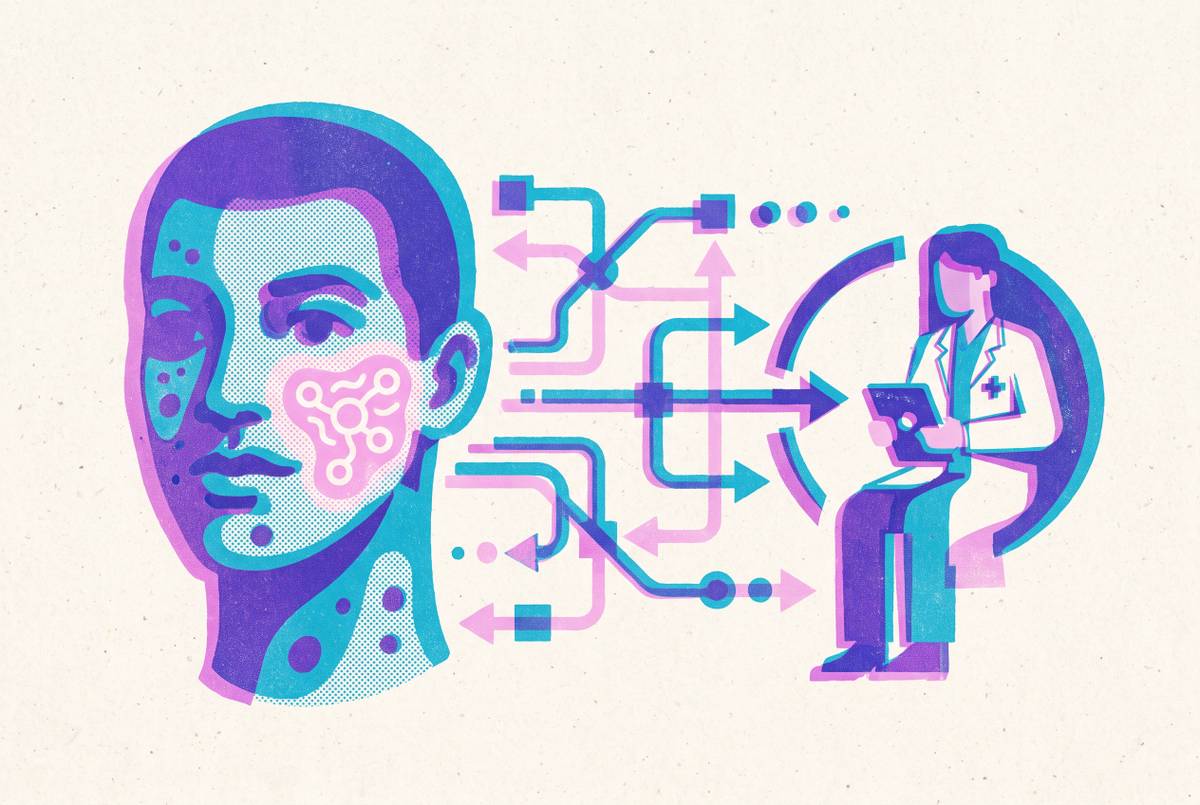
Most services use a human-in-the-loop model, in which AI helps analyze images or choose treatment plans while a licensed clinician has the final say on what to prescribe. Telehealth dermatology has three forms: store-and-forward, live video visits, and hybrid models that use both. Store-and-forward is the backbone of most asynchronous skincare services. Patients submit photographs and a skin and health questionnaire, then receive an assessment without everyone being present at the same time.
In that workflow, software may flag likely conditions, triage the case, or choose from pre-approved treatment plans. The clinician reviews the output before signing the prescription. But treatment should not end at that handoff. Well-designed platforms track the initial skin reaction, adjust product strength over time, and keep a clinician accessible throughout treatment.
Topical retinoids show why this review has clinical stakes. Tretinoin is a non-controlled prescription medication that clinicians can prescribe through telehealth in most straightforward cases in most states without an in-person examination. Screening still has to capture pregnancy contraindication and the need to adjust strength. A familiar treatment is not automatically appropriate for every patient.
The quality of the software itself also varies a lot. Wongvibulsin et al.’s 2024 JAMA Dermatology analysis found 41 AI-enabled dermatology apps, none of which were FDA-approved, and only 2 included disclaimers about their lack of regulatory approval. Those findings about consumer apps do not show how good every clinician-led telehealth service is. They do show why an AI assessment and a clinical consultation cannot be treated as interchangeable.
What the FDA's software classification framework does and does not require of these platforms
The FDA regulates software as a medical device when its functions cross into regulated clinical decision-making, but it does not regulate the practice of medicine. Device oversight asks what a tool does and which regulatory pathway applies. Professional-practice law asks who may make the treatment decision and prescribe.
The FDA’s January 2026 clinical decision support guidance made the line between device and non-device software clearer. Tools that depend on clinicians interpreting their outputs and making the ultimate decision can fall on the non-device side. Human review is therefore part of the architecture that keeps many tools off the device track, rather than a countersignature mandate created by device clearance. Tools that make or substantially determine decisions without human interpretation move toward a more demanding device pathway.
The guidance left questions about AI and autonomous-agent software open. No autonomous AI prescription services had FDA clearance in the evidence described here. “AI-powered” therefore says little about the oversight patients will receive. ClinicalTrials.gov registrations evaluating AI-assisted dermatology diagnosis with physician review also show that evidence is still accumulating for both supervised uses and autonomous prescribing.
How state practice laws create the real variation in countersignature requirements
State practice laws set the rules for when a clinician must review a case. For common telehealth dermatology prescriptions, that generally means physician or nurse-practitioner review, which can take place remotely. The distinction is important for access. A legal requirement for human judgment need not mean a trip to a clinic.
Recent state laws show a pattern of tightening control over the final decision. Texas SB 1188, which took effect September 1, 2025, requires licensed practitioners to review AI-generated records under Texas Medical Board standards and tell patients when they use diagnostic AI. California’s three healthcare AI bills, signed by Governor Gavin Newsom on September 30, 2026, require a licensed professional rather than software to make final clinical care decisions. Delaware HB 191, signed April 23, 2026, bars nonhuman entities, including AI agents, from certification or licensure in the specified medical, physician-assistant, and nursing roles.
These laws place the clinical decision with a human professional. So a platform may have different oversight in different states, even when it describes its service the same way to the public.
Utah's autonomous prescribing pilots and what they actually do and do not eliminate
Utah presents the sharpest exception to that direction. Its Office of Artificial Intelligence Policy hosts at least three pilots that test AI prescribing in a regulatory sandbox. The second pilot, announced October 2026, permits an app to diagnose acne and provide prescription treatment, with phased physician oversight. It was the nation’s first state-authorized AI initial-prescription program, while more serious conditions are referred to a licensed physician.
The dermatology pilot constrains autonomy through its design. Software uses structured clinical inputs and an AI assessment of a face scan to choose between topical treatment plans that have been pre-approved. There is no free-text prescribing interface. The system can prescribe only treatments on its approved treatment list, and it refers cases outside its scope. Those limits leave room for prescriptions that a clinician has not judged one by one.
The sandbox’s legal protection is narrower than “permission to practice medicine” might suggest. Regulatory mitigation agreements suspend specified Utah licensing enforcement, but they do not license AI, waive federal law, provide a malpractice shield, or change the standard of care. The Utah Medical Licensing Board’s physicians raised a separate objection in April 2026. A substantial majority signed a letter calling for the AI Prescription Pilot’s immediate suspension, arguing that the Board had not been consulted and that each renewal requires reassessment and clinical decision-making.
California’s final-decision requirement and Utah’s subsequent sandbox expansion thus represent different approaches to autonomous care. Even autonomy has degrees. Removing an individual signature can leave extensive human-designed limits in place, without supplying the contextual review that signature ordinarily represents.
Why the access gap makes this regulatory debate genuinely difficult, not just a safety-versus-efficiency tradeoff
The strongest argument for reducing countersignature requirements begins with patients who cannot reach a specialist. As of 2024, eight states had no board-certified pediatric dermatologist, and most U.S. counties had none. Pediatric dermatology waits were among the longest of referred pediatric subspecialties. For those patients, the comparison is not always automated care against promptly available specialist care. Delayed care has costs of its own.
A systematic review in JCAD found that AI-assisted teledermatology technologies cut wait times significantly, while AI-supported decision tools made diagnoses more accurate and cut referrals that were not needed. The literature also supports task-shifting to nonspecialist providers with AI assistance, though concerns remain about image quality, algorithmic bias, and how unevenly these tools are put into use. Those findings support an access benefit from assisted care. They do not by themselves prove that removing clinician authorization produces the same benefit safely.
Utah’s dermatology pilot explicitly targets “healthcare deserts,” where specialty access is limited. Yet an app still requires a smartphone, internet access, and enough health literacy to use it correctly. The digital divide can overlap with the care gap. Less review may make care more widely available without reaching everyone who needs help, so claims about access need to be checked as closely as claims about safety.
What clinician oversight actually contributes that the AI layer cannot replicate on its own
Structured intake can miss details that its questions do not ask about. A patient may report no pregnancy risk while a fuller medication history prompts further inquiry, or an acne-like presentation may warrant a biopsy referral. A clinician can also check for interactions beyond the few topical-treatment options the software can choose from.
LaRocco et al.’s 2026 study, The Clinician’s Veto: Navigating Trust, Liability, and Uncertainty in Autonomous AI Prescribing, found that prescribing clinicians would not permit autonomous prescribing without confidence-based escalation. They preferred abstention when uncertainty arose from the model’s own lack of knowledge. They accepted personal liability only when the system’s reasoning was transparent enough to support a decision under acknowledged uncertainty.
The same study found that clinicians assigned responsibility primarily to the AI company and regulator when autonomous systems acted without escalating to human review. That exposes an accountability gap, while legal liability may still exist. A named prescribing clinician supplies an identifiable point of responsibility for treatment, follow-up, and patient recourse. A signature that reflects no genuine review would not deliver the same protection.
The evidence also distinguishes assistance from replacement. A 2023 systematic review of AI in primary care medication reported reductions in preventable errors, including overprescribing and adverse drug interactions, but found systems limited to assistive roles and no studies at higher autonomy levels. Clinician review remains the practical safety floor while that gap persists.
What oversight mechanisms to look for when evaluating an online dermatology platform
For patients comparing services, the practical task is to turn those clinical functions into questions a platform can answer. Who holds the prescribing license, and are they licensed in the patient’s state? Is that person a physician, nurse practitioner, or physician assistant? A reader specifically seeking physician approval needs that distinction made explicit, rather than an assurance that care is “clinically supervised.”
The next question concerns the point of authorization. Does a clinician review every prescription before it is issued, and is that clinician identified to the patient? If the goal is care involving a real dermatologist, the reviewer’s professional role needs to be clear as well. An AI accuracy claim cannot answer any of these questions, because image-analysis performance is not equivalent to a clinician’s diagnostic judgment.
The service should also explain the limits of treatment. Patients can ask what happens when the AI is uncertain, when images are inadequate, or when a condition falls outside its scope. How is pregnancy screening for retinoids used in the AI assessment, clinician review, or both? A referral pathway makes the boundary visible. If a service says nothing about escalation, patients cannot tell whether it can spot cases it should not treat.
Follow-up and regulatory disclosure complete the comparison. Patients should ask whether clinician access continues during treatment, how reactions and strength adjustments are handled, and whether the software is FDA-cleared, FDA-exempt, or an uncleared consumer app. A message-based consultation can provide documented human review without a live visit. The useful signals are an identified prescriber, authorization before dispensing, scope limits, and continuing access.
How the regulatory landscape is likely to develop and what patients should watch for
The state developments described through October 2026 point toward continued divergence. Most states are giving the licensed professional a stronger final say, while Utah is using sandbox authority to test autonomy within set limits. Its Board’s April objection remains unresolved in the account provided here. Patients therefore need to watch both changes in state law and changes in a service’s own prescribing process.
Federal proposals could reshape that boundary without settling the safety questions. H.R. 238, the Healthy Technology Act of 2025, proposes allowing AI systems to qualify as recognized prescribers subject to state authorization and specified federal requirements. LaRocco et al. argue that such developments are advancing ahead of the technical and ethical conditions needed for safe deployment.
For patients, the useful checks remain specific. Does the service disclose applicable state oversight rules, any sandbox arrangement and its limits, and the regulatory status of diagnostic or treatment-selection software? Those answers may change as trial results come in and laws change. The durable standard is whether a responsible clinician can interpret uncertainty, authorize appropriate treatment, and remain available when the initial plan needs to change.
Sources
- AI-Assisted Dermatology in Provider Shortage Areas: A Systematic Review of Access and Wait Time Outcomes
- Evaluating an Artificial Intelligence Tool to Help Primary Care Doctors Diagnose Skin Conditions.
- Using Artificial Intelligence to Help Doctors Identify Different Skin Conditions and Improve Patient Care
- The Clinician's Veto: Navigating Trust, Liability, and Uncertainty in Autonomous AI Prescribing