Biologic Therapies for Chronic Skin Conditions
Precision-targeted proteins are replacing broad-spectrum drugs for skin disease.

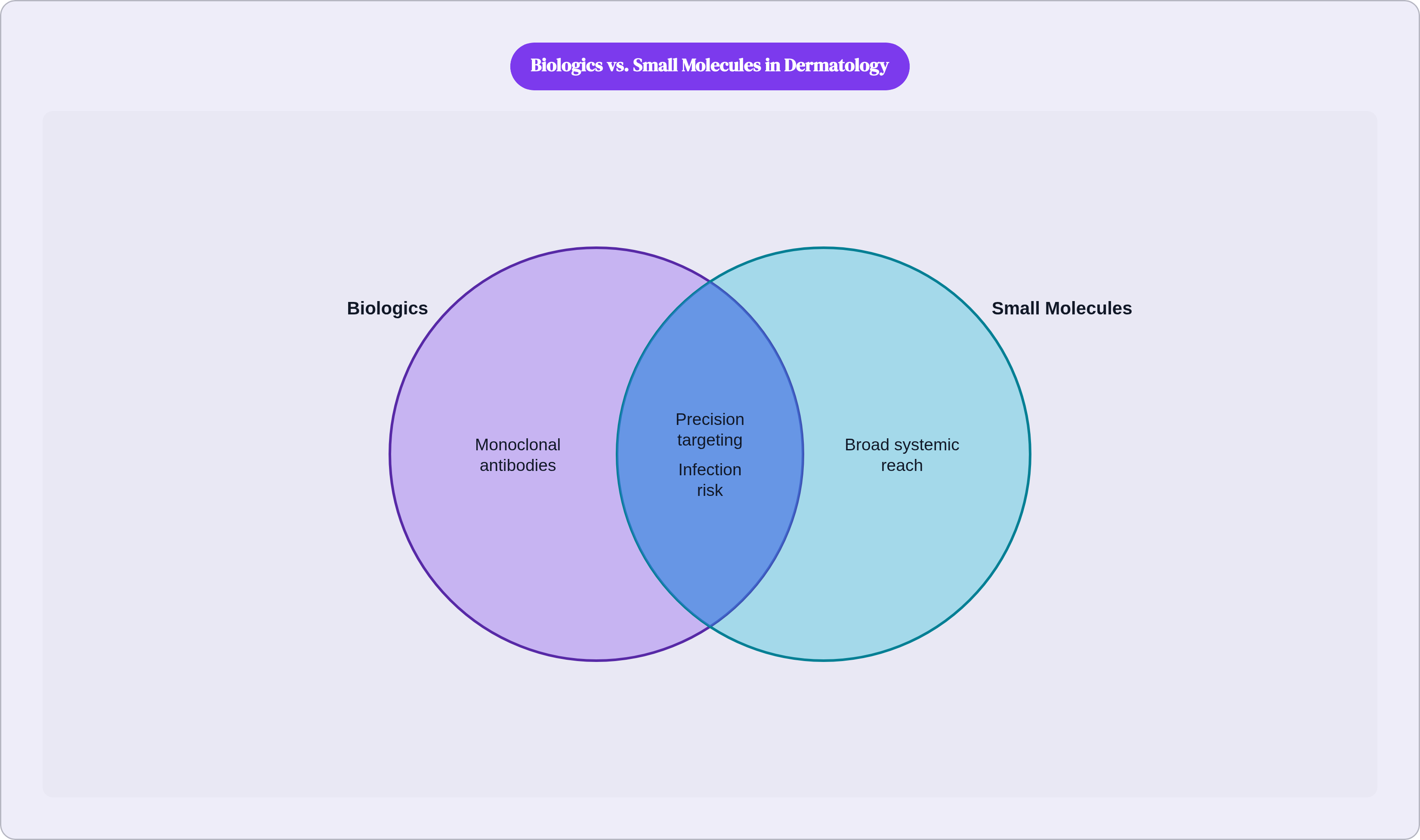
Conventional drugs, the kind synthesized in a lab from chemicals, are small molecules. They move through the body in broad, often blunt ways, affecting multiple systems at once. That broad reach is why something like cyclosporine works; it's also why it causes kidney toxicity, hypertension, and a long list of downstream problems you never signed up for.
Biologics are a different animal. Large, complex molecules derived from living cells, typically proteins engineered as monoclonal antibodies (lab-made proteins that mimic the immune system's natural targeting), designed to bind to a single, specific target in the inflammatory cascade. Think of them less like a broad-spectrum antibiotic and more like a key cut to fit one lock.
That precision is the central innovation. Instead of suppressing immune function across the board, a biologic intervenes at a precise point: a cytokine, a receptor, a signaling protein. The immune system keeps running; one specific inflammatory signal gets interrupted. In theory, clean. But what if the immune system doesn't cooperate with that clean story? In practice, the immune system is a network, and blocking one node shifts how the rest of it behaves. We're still learning what that means in individual patients over the long term.
Because biologics are proteins, the digestive tract breaks them down before they can act. This is why nearly every approved agent requires injection or infusion. Clinicians sometimes treat this as a minor logistical footnote; patients rarely experience it that way. Managing injection schedules is a structural feature of how these molecules work, not a detail. The oral agents entering the same clinical space, JAK inhibitors and TYK2 inhibitors, which block specific signaling enzymes inside immune cells, are technically small molecules rather than biologics, though they target similar precision points in the inflammatory cascade and increasingly belong in the same conversation.
One more thing before moving forward: biologics are not interchangeable. Each targets a specific pathway. Choosing the wrong biologic for a patient's dominant cytokine profile doesn't yield a suboptimal result; in many cases it yields no result at all. That makes pathway identification the core clinical decision, not diagnosis alone.
The Cytokine Pathways Biologics Target in Skin Disease, and Why the Targets Matter
To understand why eleven biologic agents are now approved for moderate-to-severe psoriasis alone, we must first look at the cytokine map.
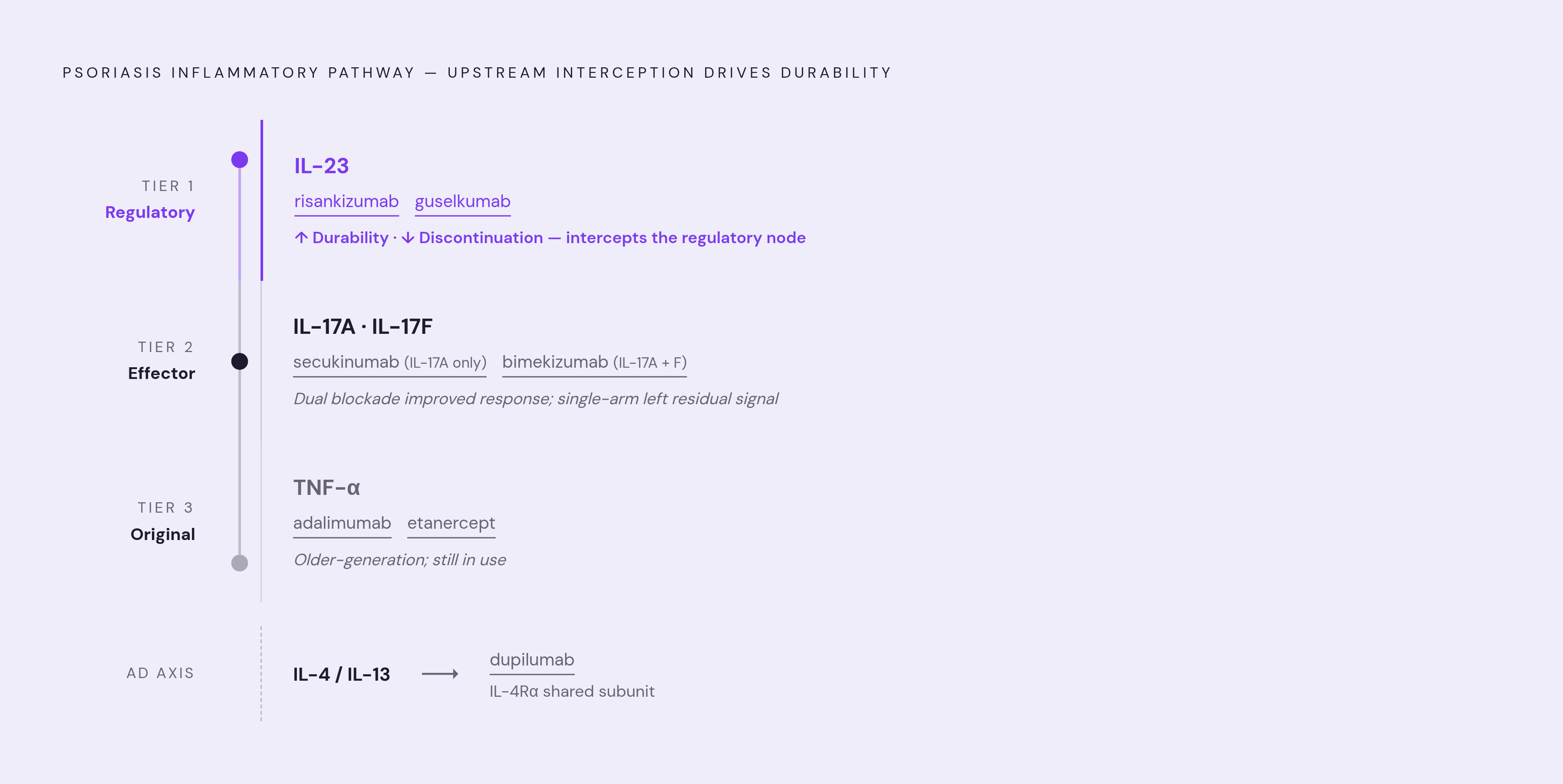
TNF-alpha was the original target. Adalimumab and etanercept were among the first approved agents, and they were meaningful when they arrived. They're still in use. They're also now largely considered older-generation for psoriasis, having been superseded by approaches that are more targeted and, frankly, more efficacious.
The IL-17 pathway is where the high-efficacy standard currently lives for plaque psoriasis. IL-17A and IL-17F drive the inflammatory loop; agents like secukinumab, targeting IL-17A, and bimekizumab, targeting both IL-17A and IL-17F, represent the current ceiling of response rates in pivotal trials. The dual blockade bimekizumab introduced reflected a specific clinical insight: blocking only one of the two cytokines left a meaningful inflammatory signal intact. Close the second door, and you get better responses. Simple logic that took years of mechanistic work to arrive at.
One level upstream, the IL-23 pathway regulates IL-17 production. Risankizumab and guselkumab block IL-23 rather than IL-17 directly, and they've distinguished themselves on durability specifically. Discontinuation rates are lower; patients maintain response longer. There's a real clinical logic to intercepting the upstream regulatory node rather than the downstream effector. That raises an important question: why not move even further upstream? The pipeline is attempting exactly that, and what's been learned from those attempts has been mixed.
Atopic dermatitis follows a different cytokine map entirely. The disease is driven primarily by the IL-4 and IL-13 axis, which explains, mechanistically, why the biologics that work brilliantly in psoriasis are ineffective in AD. Dupilumab blocks the shared IL-4Rα subunit, simultaneously inhibiting both signals. Tralokinumab and lebrikizumab target IL-13 directly, achieving a similar downstream effect through a different binding point.
Then there's the itch pathway. IL-31 is the cytokine most closely associated with driving itch, and for conditions like prurigo nodularis, where the itch-scratch cycle is itself the primary driver of lesion formation, targeting itch directly rather than inflammation broadly is a clinically significant distinction. Nemolizumab, the first IL-31 receptor antagonist approved in dermatology, received FDA approval in 2024. It's a narrow target with a specific rationale, and that specificity is the point.
A patient with psoriasis has a fundamentally different dominant cytokine signature than a patient with atopic dermatitis. Selecting the right pathway isn't a secondary refinement; it's the mechanism of efficacy.
Which Conditions Now Have Approved Biologic Options, and What Those Options Look Like in Practice
Psoriasis has the most mature biologics landscape. TNF, IL-17, and IL-23 inhibitors are all approved across multiple agents. Guselkumab became the first IL-23 inhibitor approved for pediatric psoriasis in 2025. The adult options are extensive enough that the field is now as focused on differentiating agents from one another as it was, a decade ago, on establishing that any of them worked.
Atopic dermatitis arrived at biologics later but has moved quickly. Dupilumab was approved for adults in 2017 and now carries approvals extending down to six months of age, driven by accumulating pediatric trial data. Tralokinumab and lebrikizumab followed for adults and adolescents. The pattern has been consistent: expand access to younger patients as trial data matures and safety signals accrue.
Hidradenitis suppurativa has historically been badly underserved, with disease burden that far outpaced treatment options. Bimekizumab's FDA approval for HS in late 2024 added to adalimumab and secukinumab as approved options. Three approved biologics for a condition that, not long ago, had essentially none.
The breadth of approvals beyond these anchors is notable. Dupilumab received approval for bullous pemphigoid and chronic spontaneous urticaria in 2025, the latter representing the first new targeted therapy for CSU in more than a decade. Spesolimab was approved for generalized pustular psoriasis in 2022, addressing a condition with a mechanistically distinct profile from plaque psoriasis.
In practice, most biologics are approved for moderate-to-severe disease: patients whose condition hasn't responded adequately to topical approaches. They're not first-line for mild disease. Administration frequency varies considerably by agent; some require monthly injections, others extend to every two or three months once maintenance dosing is established. That difference matters for adherence and daily burden in ways that rarely get the weight they deserve in prescribing decisions. By 2023, over 1.6 million U.S. patients were being treated with biologics for psoriasis and atopic dermatitis. The scale of adoption reflects both unmet need and growing clinical familiarity with how to use these agents well.
What Patients Can Realistically Expect from Biologic Treatment: Response, Timing, and the Gap Between Trials and Individual Experience
Patient expectations and clinical trial data occupy different worlds, and conflating them causes real, avoidable frustration.
Response is not immediate. Most biologics show meaningful improvement at twelve to sixteen weeks, with continued improvement often extending through six months to a year. Patients who start a biologic expecting dramatic results in two weeks are going to have a hard time. Setting that expectation clearly upfront prevents a lot of unnecessary early discontinuation.
The trial data also understates individual variation. In clinical trials for atopic dermatitis biologics, a substantial proportion of patients, often more than a third, fail to reach the benchmark of 75% improvement in disease severity at sixteen weeks. One might argue this reflects a failure of patient selection rather than a fundamental limitation of the drug class, and that argument has real merit. But it also reflects genuine biological heterogeneity. Some patients respond profoundly. Others need a second agent, a different target, or a different approach entirely. Treating that adjustment process as normal rather than exceptional, and communicating that to patients from the start, is one of the more underappreciated clinical skills in managing these conditions.
Durability has become an increasingly important differentiating factor between agents. Bimekizumab in psoriasis showed sustained efficacy through more than a year across multiple pivotal trials. IL-23 inhibitors have distinguished themselves specifically on drug persistence, meaning patients are less likely to discontinue over time, and when they do discontinue, some maintain response longer than patients stopping earlier-generation agents. In a condition requiring ongoing treatment, durability is not a secondary endpoint; it's often the one that determines whether treatment stays workable over years.
Biologics are maintenance therapy, not a cure. Stopping treatment typically leads to disease return. Patients who understand this upfront are better positioned to engage with treatment as a long-term commitment rather than a fixed course with a finish line.
Expert panels are also increasingly formalizing recommendations for transitioning patients away from long-term corticosteroid use toward biologics and JAK inhibitors. That shift in guidance is happening faster in some practice settings than others, and the gap between guideline updates and routine clinical practice is its own problem.
The Safety Profile of Approved Biologics and How It Compares to What Patients Often Assume
The most common concern patients bring to these conversations is some version of: if it modulates my immune system, doesn't that mean I'm more vulnerable? The straightforward answer is yes, with nuance that actually matters.
Increased infection risk, particularly upper respiratory infections, is the most consistent side effect across biologic classes. This is the trade-off of interfering with immune signaling, even precisely. It's real, and patients should know about it before they start.
Specific contraindications exist. Patients with latent tuberculosis or congestive heart failure are generally not candidates for certain agents. Screening before initiating treatment is standard practice. The specifics vary by drug; the principle of upfront evaluation is universal.
The malignancy question is where patient assumptions diverge most sharply from the available data. A 2025 retrospective cohort study following psoriasis patients from 2010 through 2023 found malignancies in 4.4% of the biologic-treated group, compared with 18.2% in the topical monotherapy group. That number stops people cold. Why exactly does this happen? The most likely explanation is that effectively controlling systemic inflammation carries its own protective effect, and that the topical-only group represents patients with more refractory, more persistently inflammatory disease. Retrospective data has real methodological limits; this finding shouldn't be read too cleanly. Still, it complicates the reflexive assumption that immune modulation raises cancer risk, because that assumption treats precision pathway targeting as if it were equivalent to the broad immunosuppression of cyclosporine. It isn't.
The pipeline, though, carries its own cautionary signals. Amlitelimab, a closely watched late-stage candidate for atopic dermatitis, raised malignancy concerns despite hitting efficacy endpoints. Kyowa Kirin discontinued trials of rocatinlimab after two cancer cases. These are different molecules with different mechanisms from currently approved agents, but they're a reminder that safety scrutiny in this field is ongoing. The long-term picture for any given agent continues to evolve as real-world data accumulates, and anyone who tells you otherwise is selling certainty the evidence doesn't support.
One structural limitation worth acknowledging: most comparative data between agents comes from network meta-analyses, statistical methods that indirectly compare treatments across multiple trials, rather than direct head-to-head trials. Ranking agents against each other with confidence is genuinely difficult given the evidence base. That's a constraint on what the field actually knows, and clinicians are making decisions inside that constraint every day.
Why Cost and Access Remain Significant Barriers Even as the Treatment Options Grow
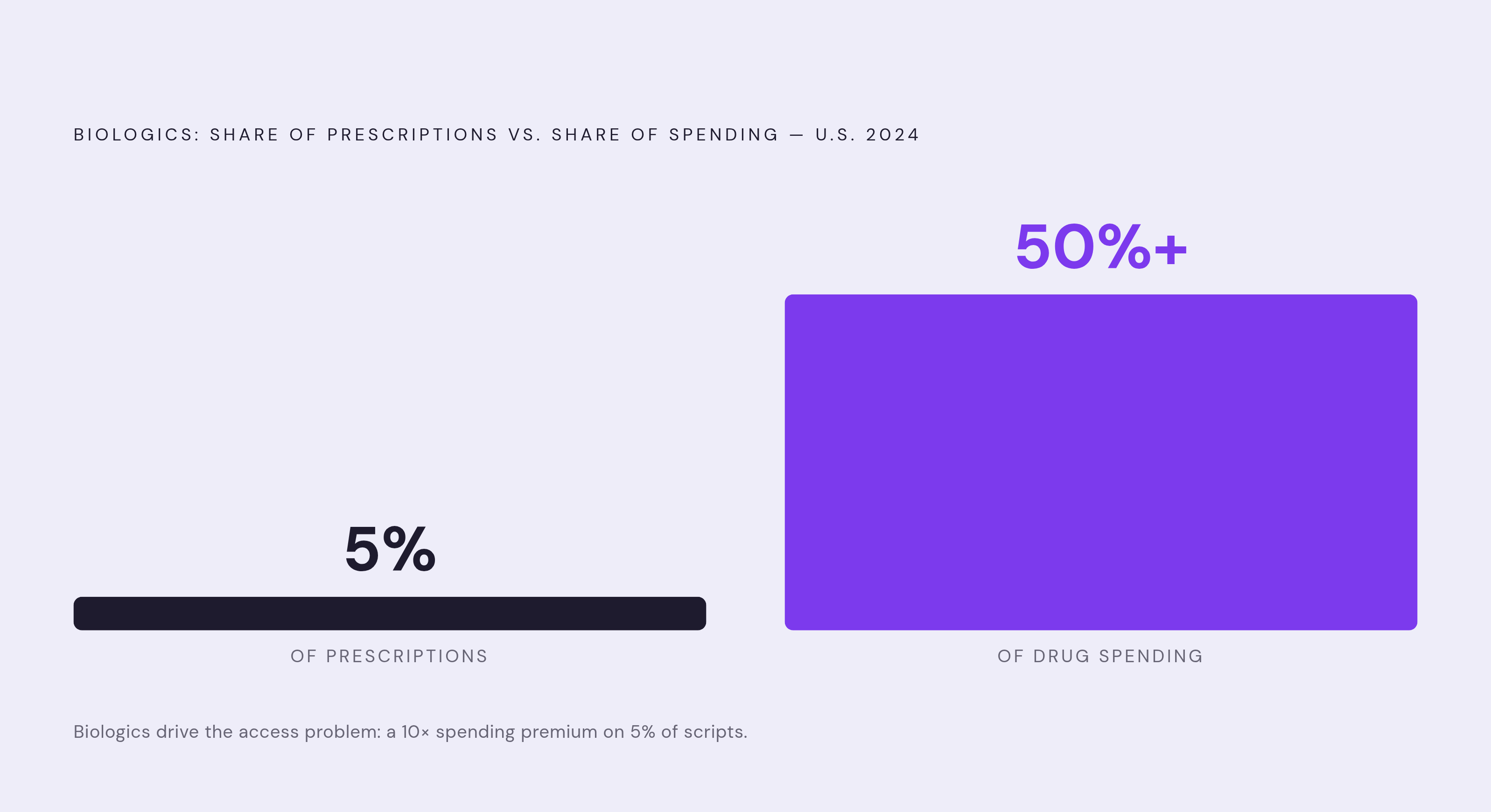
Biologics make up roughly 5% of U.S. prescriptions but account for more than half of total drug spending as of 2024. The cost concentration is extreme, and it doesn't resolve just because additional agents have received approval.
Biosimilars are the primary market mechanism for driving costs down. Adalimumab now has ten biosimilars available in the U.S., with wholesale acquisition costs ranging from modestly to substantially lower than the originator. In principle, that should translate to patient savings. In practice, imperfectly.
Pharmacy benefit managers continue to favor the reference biologic on formularies because of larger manufacturer rebates. A biosimilar's lower list price does not automatically outweigh that incentive structure. The cost reduction that exists in principle remains inaccessible to the patients who need it most, and that gap between list price and formulary reality is where access breaks down. I've watched this play out repeatedly: a patient qualifies for a biosimilar, the prescriber writes for it, and payer mechanics route them back to the originator anyway. But how does this affect our original promise of expanded access? Every approval that looks like progress on paper can quietly stall at the formulary level.
Developing a biosimilar is not cheap, either. Comparative efficacy trials are required, and estimated development costs run into the tens of millions. This deters investment for drugs serving smaller patient populations, precisely where biosimilar entry is least likely to occur organically and where patients have the least negotiating leverage.
The regulatory environment is accelerating. The FDA approved a significant number of biosimilars in 2024; the EMA approved notably more in the same period. The global dermatology biosimilar market is projected to nearly double over the next decade. But FDA approval is only the first step. Formulary placement, patient assistance programs, payer negotiations, clinician familiarity with biosimilar products: each of those steps is a place where the promise of expanded access gets quietly eroded. Expanding the menu of approved treatments doesn't solve the access problem on its own. The menu and the ability to order from it are different things.
What the Next Generation of Treatments Is Targeting and What the Pipeline Says About Where Precision Dermatology Is Heading
Read the pipeline as a whole and a fairly coherent story emerges. Treatments are becoming more targeted, longer-acting, and in many cases oral. Each of those vectors addresses a specific limitation in the current approved landscape.
On the oral front, zasocitinib and envudeucitinib are in late-stage development for psoriasis. The preference data on injectable versus oral administration carries practical weight: some patients who would benefit from biologics decline because of injection aversion, and an oral agent with comparable efficacy removes that barrier. Icotrokinra, an injectable IL-17A inhibitor, is also late-stage, targeting a pathway the field already knows works; the differentiation there is pharmacokinetic and dosing-interval driven.
Amlitelimab is the most closely watched pipeline asset for atopic dermatitis. Sanofi's OX40L inhibitor showed a 54.5% EASI-75 response rate (meaning at least 75% improvement in disease severity) at week 24 in a key phase 2b dose cohort, with clinical responses maintained through week 52 even after treatment withdrawal. The OX40/OX40L mechanism sits further upstream in the immune cascade than current approved agents, which is what makes both its efficacy promise and its safety signals significant. Intervening higher in the immune regulatory hierarchy expands the theoretical reach of the effect, and also raises the stakes when something goes wrong. That tension is not abstract; amlitelimab's malignancy concerns and rocatinlimab's discontinuation both emerged from this class of upstream mechanisms. It is also worth considering whether the durability promise justifies the risk profile — that is the question the field has yet to answer, and Sanofi is projecting a 2026 FDA filing, so the timeline for that answer is not comfortable.
Other atopic dermatitis approaches in development target mechanisms further upstream still, including IL-4Rα inhibition and STAT6 degradation pathways. The logic is consistent across all of them: the further upstream you intervene, the broader the downstream effects. Broader effects cut both ways.
For hidradenitis suppurativa, povorcitinib and sonelokimab are in late-stage development. A condition that had nearly no targeted options recently is now receiving serious pipeline investment, and that shift alone represents a meaningful change in how the field is prioritizing historically underserved conditions. It took longer than it should have, but the investment is real.
Seven new dermatologic treatments and seven expanded indications in 2024 alone. Understanding which biologic targets apply to which conditions, and what mechanistic rationale underlies each choice, is becoming a core competency for practicing dermatologists rather than a specialist subspecialty. The pace of approvals has outrun the infrastructure for communicating them clearly.
What the pipeline makes visible is that the matching problem, the right pathway to the right patient with calibrated expectations about timing and durability, is where outcomes are increasingly determined. The number of approved options is growing faster than most clinical workflows can absorb, and narrower targets, longer dosing intervals, and an expanding map of conditions that once had no targeted therapy at all are only going to intensify that pressure. Whether patients can actually access that progress depends on how well the clinical and systemic infrastructure around it develops. Platforms like Nolla are attempting to address part of that gap. Nolla is an AI-assisted skincare telehealth service where AI guides symptom intake and licensed US clinicians review cases and issue prescriptions, typically in about 10 minutes. The science is moving. The systems question is considerably more complicated.