The Prescription Firewall How AI Skin Platforms Lock Out Autonomous Prescribing
Clinicians, not algorithms, must authorize prescriptions in AI dermatology.

AI-assisted telehealth dermatology with clinician review uses AI to organize skin photos and medical history before a licensed clinician assesses the case and approves any prescription. The Prescription Firewall is the legal and ethical boundary between those tasks. Understanding that boundary helps patients distinguish clinician-supervised care from systems that let AI act first and ask a physician to review later.
Why a prescription cannot be issued by an algorithm, no matter how accurate the AI
A patient uploads skin photos, answers questions, and gets a care plan. The process can feel like one seamless exchange. Yet the decisive question comes at the end. Who signs the prescription? In clinician-reviewed care, that authority belongs to a licensed practitioner because prescribing is tied to a clinical relationship and human accountability.
AI can already flag patterns in lesions, map how severe they are, and draft treatment plans. Those capabilities do not confer prescribing authority. The FDA’s draft guidance for AI-Enabled Device Software Functions described supportive systems that “rely on the human to interpret the AI outputs and ultimately make clinical decisions.” In December 2025, the FDA cleared UpDoc (K253281), an AI agent that supports clinicians in adjusting medications, but that clearance stopped short of autonomous prescribing authority. No fully autonomous AI prescription service has been FDA-cleared to date.
How asynchronous care works and where AI actually sits in the clinical chain
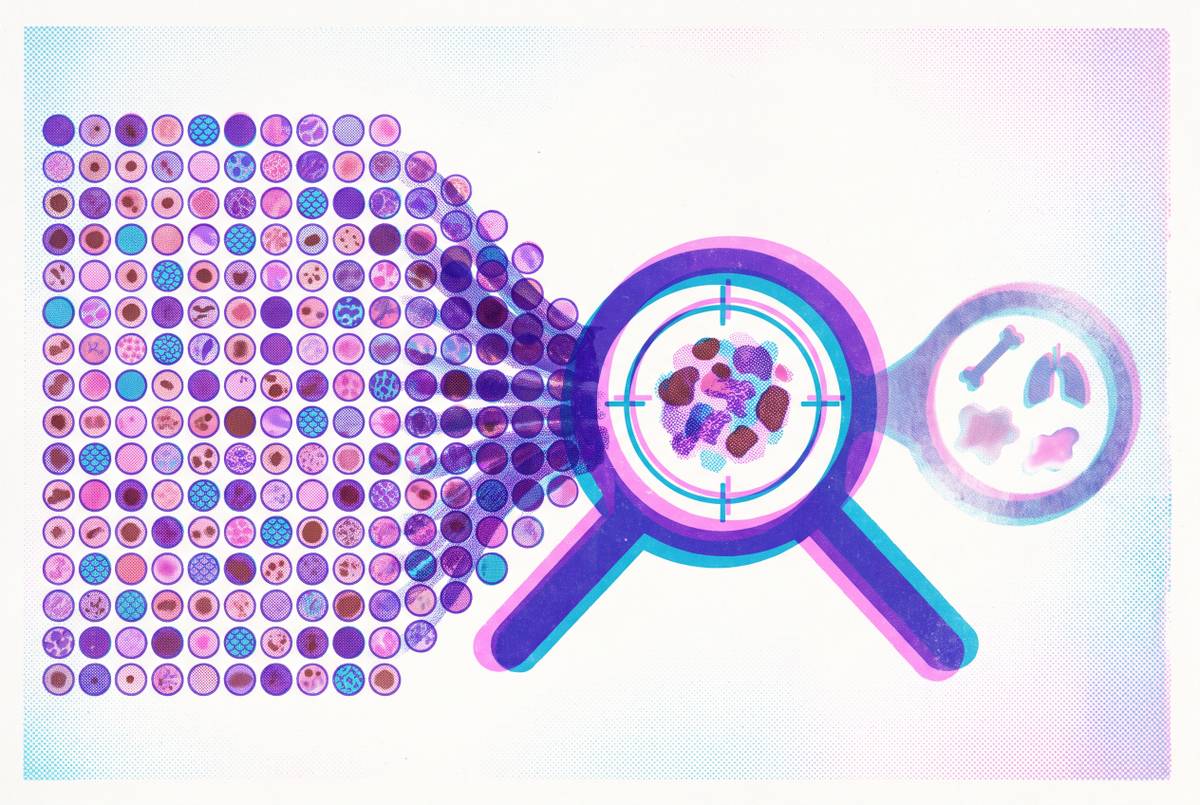
The dominant model is store-and-forward care, also called asynchronous care, in which the patient and clinician need not be present at the same time. Its sequence is intake → AI triage → clinician review → prescription. Patients submit photographs and medical information, and AI flags patterns and organizes the material before the clinician opens the case. The clinician begins with an organized case rather than raw information. This preparation can reduce the time and cost per case, making it economically viable to reach more patients.
The sequence defines each participant’s authority as well as their workload. AI does not issue a diagnosis with legal standing or sign the prescription in this model. Nor does it conduct a physical or real-time exam. It sees only what the patient photographs. So neither AI nor the clinician reviewing the case can assess an unrelated suspicious lesion that is missing from the images, though an in-person visit might reveal it. Photo quality also constrains both stages of review, so having a clinician involved does not make every case suitable for asynchronous care.
The Utah pilot as a live stress test of the firewall
Utah’s pilot program challenges that sequence directly by using AI to diagnose acne and prescribe topical medications while clinician oversight diminishes in stages. In the next cohort described by the program, AI submits prescriptions directly, with retrospective clinician review at least weekly. After that threshold, AI prescribes autonomously, with a physician reviewing a 10% sample of prescriptions each month.
The platform bases its approach on how common acne is, how it shows on the skin, its standardized severity grading, and first-line topical treatments with long-standing safety profiles. The proposed scope is deliberately narrow. However, AAD president Murad Alam, MD, warned that reducing physician oversight “increases the risk that reviewers defer to AI output instead of applying independent clinical judgment.” He also stated that AI “should not be used to independently diagnose or treat dermatologic conditions.” Ferris raised a different concern, saying “we do have a lot more advanced therapies” that patients may miss without seeing a dermatologist, including treatments that can prevent scarring. Both questioned the access argument because many of the topical treatments are already widely reachable.
Utah’s legislation is the first to propose that AI “can qualify as a practitioner eligible to prescribe drugs” if authorized by the state or FDA. Most medical boards do not currently accept that view of the law. The retrospective arrangement also separates action from responsibility. AI acts first, while the clinician bears responsibility for adverse outcomes, a structure the AAD characterizes as inverting the clinical relationship.
How federal and state law fragment the prescribing firewall across jurisdictions
The rules governing this boundary do not form a single federal prohibition. The FDA’s January 2025 draft guidance described a continuum from more autonomous systems to supportive tools, without categorically prohibiting autonomous action. Its January 2026 guidance for clinical decision support software made the line between non-device and device software clearer. Software that directs clinical action, is used by patients or caregivers, or involves time-critical decisions comes under FDA regulation, but that guidance did not say how it applies to autonomous agents or AI software.
State practice rules add a separate layer. Many states require a synchronous audio-visual evaluation adequate to establish diagnoses and identify contraindications before telehealth prescribing. Others explicitly allow asynchronous prescribing for follow-up visits after an initial synchronous relationship has been established. What a platform offers can change from state to state even when its software stays the same.
That fragmentation creates a governance risk as well as an operational challenge. A platform may structure operations around a permissive state while serving patients in stricter jurisdictions. Interstate prescribing rules remain a central concern for that reason. Assessing a tool requires considering both whether it may be sold or used and whether its particular prescribing arrangement meets the rules that govern the patient’s care.
Why AI skin analysis performs unevenly across skin tones, and what that means for autonomous prescribing
Skin lesion datasets disproportionately represent fair-skinned patients, leaving models less effective on darker skin tones. The ISIC dataset, widely used in computational dermatology, has a pronounced imbalance, with a large majority of images showing light skin and a small minority showing dark skin. Missing representation is difficult to assess when reporting is sparse. A scoping review found that only 10% of dermatology AI studies reported skin tone data, while most FDA-approved AI dermatology tools say little about who is represented in their datasets.
The performance consequences are not identical across tools. Some show lower sensitivity, specificity, and/or accuracy when identifying serious conditions such as melanoma in darker skin tones, described in these studies as Fitzpatrick types III–VI, compared with types I–II. The affected measures vary by model and study. This is evidence against treating a strong overall score as proof of reliable performance for every patient.
Patient-submitted photographs add another source of uncertainty because performance on curated test images may not hold in everyday use. What happens when uneven training data meet a poor-quality photo? That combination makes it especially important for clinicians to use their own clinical judgment, though review cannot overcome every limit. The clinician-review step provides an opportunity to correct an assessment rather than letting it become a prescription without challenge.
Access advocates reasonably ask whether imperfect AI is better than no care at all. But that comparison leaves out AI-assisted care with clinician review. Removing review where performance is least reliable risks offering the weakest assessment to patients who most need a dependable one.
What can an online dermatology service prescribe after a clinician reviews AI screening?
With oversight intact, remote dermatology can support care for a defined range of conditions, including rosacea, eczema, psoriasis, hair loss, and hyperpigmentation. Photo review and synchronous video can support diagnosis and prescribing within the service’s scope. For photoaging, prescription tretinoin is one of the topical retinoids FDA-approved for that use, along with tazarotene. Tretinoin and daily broad-spectrum SPF 30+ sunscreen are two of the highest-yield evidence-based interventions. The value lies in selecting appropriate care.
That selection requires more than recognizing a visible pattern. A clinician considers drug interactions, pregnancy, and underlying conditions that a structured questionnaire may not reliably surface. Review can also catch a co-occurring lesion visible in an acne photo that warrants in-person evaluation. This clinical work connects what appears in the image with the patient’s wider medical circumstances.
The same judgment applies to the rest of a skin routine. Using prescription retinoids with over-the-counter acids without guidance can harm the skin barrier. A clinician-supervised routine typically combines a prescription retinoid, a targeted active such as niacinamide, azelaic acid, or vitamin C, a reliable moisturizer, and broad-spectrum SPF. Each ingredient is selected against the patient’s history. As the patient responds, treatment can be adjusted, making oversight an ongoing relationship.
How the same firewall structure governs AI-assisted contraception care, showing this is a category rule, not a quirk of dermatology
The Society of Family Planning recommends offering counseling, initiation, renewals for methods not requiring procedural placement, and follow-up through telemedicine. Patients may choose audio-video, audio-only, or asynchronous delivery, while licensed providers remain the prescribers. Hormonal pills, patches, and rings can be prescribed through virtual consultations, with prescriptions typically reaching pharmacies within a day or two. IUDs and implants still require in-person insertion, although initial consultations can happen virtually.
The society supports prescribing a one-year supply of combined hormonal contraceptives without requiring follow-up during that year unless the patient requests it, a recommendation supported by Grade 1A evidence. The medical history patients report is equally reliable in in-person and telemedicine care, and asynchronous screening can work well to spot unacceptable health risks. AI may help with intake and triage in that process. It does not become the prescribing agent.
Some needs also exceed what a questionnaire can reveal. For patients experiencing intimate partner violence or trauma, an in-person appointment may be important for rapport and safety. That caveat does not negate the value of remote care. Remote care needs a way for patients to get a human assessment that fits their needs, just as dermatology needs a path from photo review to an in-person examination when the images do not show enough.
What patients should ask and check when using an AI-assisted skin platform
For patients choosing a service, the practical lesson is to establish who makes the decision and when. Who reviews and signs the prescription, and is that clinician licensed in the patient’s state? Does review happen before the prescription is issued or only after AI has acted? These questions distinguish prospective oversight from retrospective auditing. The prescription should be linked to a clinician whose name and license details patients can see.
Patients should also ask what happens when photographs are poor and whether the service requests new images before proceeding. Can the patient reach a clinician if the skin responds unexpectedly? Is there a route to in-person care for a lesion that cannot safely be assessed by photo? Those answers reveal the service’s limits and how it handles them. Prescriptions subject only to retroactive or weekly review deserve particular attention, as does a business model that connects AI evaluation directly to prescription-product sales.
At intake, the service asks about medical history, current medications, and known sensitivities as well as collecting photographs. A clinician reviews the case before prescribing, and follow-up is built into the plan rather than treated as an optional, fee-gated extra. Continuous, clinician-supervised, AI-assisted care also includes referral when the clinical picture exceeds what remote review can safely assess. With those safeguards in place, AI can help make care more accessible while the clinician makes it more reliable.