Platforms Offering Clinician-Reviewed Acne Treatment Plans Without In-Person Visits
Acne responds well to photo-based review without in-person exams.

Platforms offering clinician-reviewed acne treatment plans without in-person visits are built on a straightforward clinical premise: acne is one of the conditions that remote review handles well.
Why acne is well-suited to remote, asynchronous clinical review
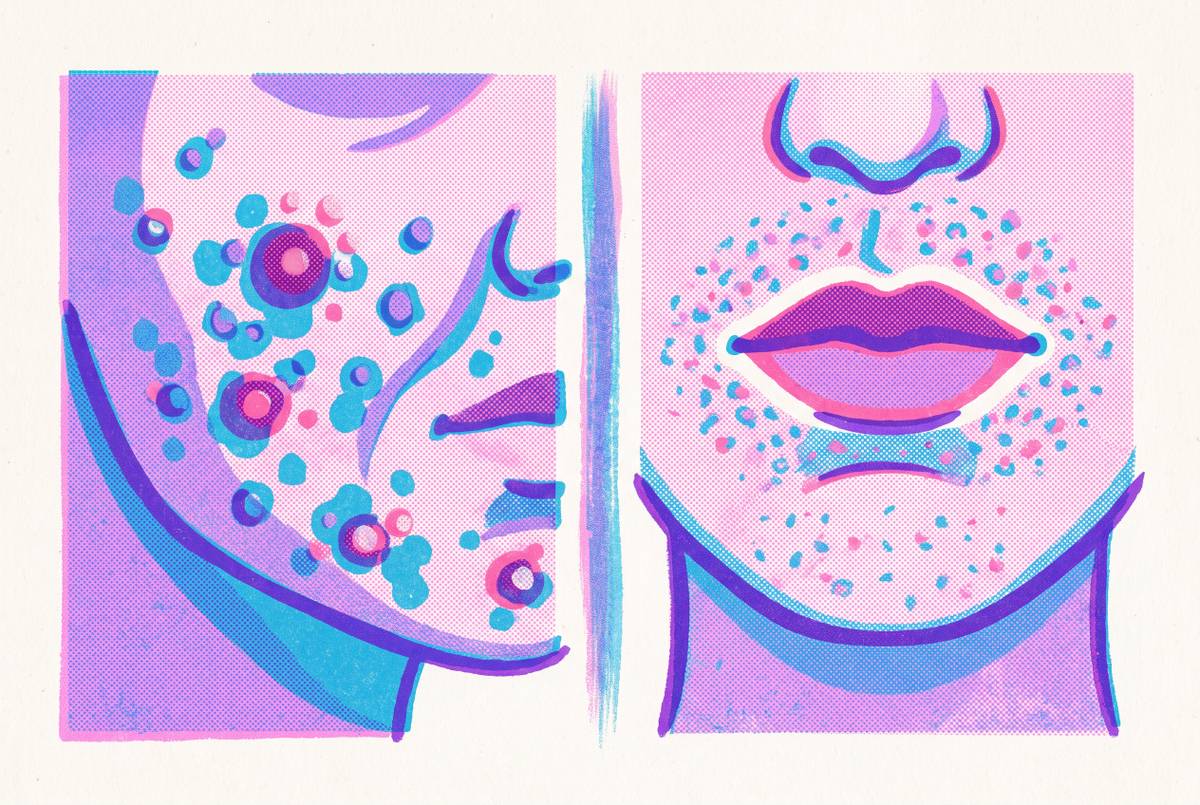
Comedones, papules, pustules, and nodules appear clearly enough on the skin that a camera can capture them. Comedones, papules, pustules, nodules, and the pattern of lesions across the face, chest, or back are all things a trained clinician can read from a well-lit photograph, without ever touching the patient. That's different from conditions that depend on palpation, texture, or a live back-and-forth to pin down. Teledermatology suitability ratings reflect that gap directly: common inflammatory conditions like acne rate high for image-based review, while conditions that require a clinician's hands rate low. A 2022 study backs this up with a number that's hard to argue with: acne patients managed through teledermatology saw an 87.94% reduction in GAGS scores, a severity measure, and a 2025 review cited that same finding as still holding up.
What makes acne even more suited to this model is where its real information lives. Acne is multifactorial. Hormonal shifts, skincare products, medications, dietary patterns, genetics, all of it feeds into how severe a case looks and what will actually treat it. But most of that information doesn't come from an exam. It comes from a conversation, or in this case, a written history. A patient describing what they've tried, what products they use, and what their cycle looks like is handing over the same material an in-person dermatologist would ask for verbally. Remote acne care isn't a thinner version of an office visit. It gathers the two inputs that matter most: images and history, in a format that happens to work well without a shared room.
How store-and-forward teledermatology works as a clinical process
The model behind most of these platforms has a name: store-and-forward, often shortened to SAF. A patient's photographs and background information get stored electronically for a clinician to review on their own schedule, separate from any live video call. Nothing about this is new or experimental. Store-and-forward is the most widely used teledermatology format in practice, and it's particularly well matched to triage and routine evaluations, exactly the category acne falls into.
The process itself is simple to walk through. A patient takes photographs and fills out a structured intake covering their history, current products, past treatments, and relevant medical background. That package gets submitted through a portal. A licensed clinician reviews it, separately and on their own schedule, then sends back an assessment, a diagnosis, and a treatment plan through that same channel. Nobody's waiting on a shared appointment slot.
Turnaround tends to run between 24 and 72 hours on most platforms. One study set in a university hospital found a median response time of just under a day across hundreds of consultations, which gives a sense of how fast this process can move when it's running well.
The intake form carries more weight than it might seem. Current products, prior treatments, hormonal history, medications: this is where the clinician gathers the context that actually shapes a plan. The photograph confirms what the skin looks like. The history explains why it looks that way and what's likely to help. Both matter, but they're not doing the same job.
What makes a patient submission clinically useful
The single biggest variable in how useful a remote review turns out to be is the quality of what the patient submits. Studies comparing patient-submitted images to clinician-submitted ones consistently find the patient images are lower quality and more variable, which has a direct effect on how confidently a clinician can make a call. Photos taken by trained professionals tend to produce better diagnostic outcomes than photos patients take themselves. That's a real gap, but it's one a patient can close with a bit of preparation, not a flaw that makes the whole model unreliable.
A few habits make a measurable difference. Natural daylight shows true skin tone and texture far better than fluorescent light or a dim bathroom. Taking photos from multiple angles, straight on and from the side, gives the clinician a sense of lesion depth and distribution that a single shot can't show. Keeping the framing consistent across follow-up photos lets the clinician actually track change over time instead of comparing two images that aren't really comparable. And skipping makeup or heavy skincare products before photographing gives the clearest possible picture of what's actually happening on the skin.
When the photos or the history aren't good enough to work with, a well-run platform doesn't paper over the gap. The UPMC rosacea teledermatology study found that teledermatologists recommended in-person appointments specifically when image quality or the information provided made a remote treatment plan inappropriate. Patients get routed toward the right level of care instead of a guess, which is the model working as intended.
History matters just as much as the photos, maybe more. A vague answer like "I've tried things before, nothing worked" gives a clinician almost nothing to act on. A specific answer, naming products, doses, how long they were used, and what actually happened, gives the clinician a real starting point. That includes skincare products, not just prescriptions. Plenty of acne triggers and treatment interactions come from over-the-counter ingredients, so listing a daily moisturizer or serum carries as much clinical weight as listing a medication. The quality of that history also determines how complex a case turns out to be on the clinician's end.
The clinical complexity a reviewing clinician is working through when they assess an acne case
A clinician looking at an acne submission isn't matching a photo to a textbook picture and writing a prescription. Acne results from several things happening at once: increased oil production, blocked follicles, bacterial activity, and a buildup of skin cells inside the pore. Hormones, genetics, and environment all push that process in different directions, so two patients with similar-looking breakouts can need very different treatment.
Part of the job is sorting out which type of acne is actually present. Comedonal acne (mostly plugged pores), inflammatory acne (papules and pustules), nodular acne, and the more severe conglobate form all call for different treatment ladders. Getting that classification right shapes everything that follows.
Hormonal context changes the picture too, especially for adult women. Acne that's concentrated along the jaw and chin and tends to flare with the menstrual cycle usually points toward a hormonal driver, and it responds to different treatments than the broader, oil-driven acne more common in teenagers. A clinician reading the intake is watching for that pattern specifically.
Treatment history narrows the options in a useful way. A patient who's already tried a topical antibiotic needs a different next step than someone starting from scratch. A patient taking a medication that's known to cause acne as a side effect needs that addressed before anything else gets layered on top. And the skincare review isn't cosmetic small talk, it's clinical work. Comedogenic emollients, overly aggressive actives, or heavy occlusive products can keep acne going no matter what prescription gets added, so a clinician has to account for what's already sitting on the skin before deciding what to add to it.
Evidence-based treatment options a remote clinician can prescribe for acne
Given all of that reasoning, what can a remote clinician actually put in a treatment plan? More than many patients expect. The first-line options that make up most dermatology care translate directly to this format.
Topical retinoids, tretinoin being the classic example, work by loosening the cohesion between skin cells in the follicle, cutting down on microcomedo formation, and speeding up cell turnover so existing comedones clear out. It's a cornerstone treatment with a long track record, useful both for active acne and for the dark marks it often leaves behind. Benzoyl peroxide, antibacterial and available in prescription-strength combinations, is another mainstay. Topical antibiotics round out the typical first-line toolkit, usually paired with benzoyl peroxide specifically to cut down on resistance. For moderate to severe inflammatory acne, oral doxycycline is a common next step, and the UPMC rosacea teledermatology study found it was frequently prescribed through asynchronous teledermatology, which confirms the prescribing pathway actually functions in practice, not just on paper. As with any systemic antibiotic, courses are generally kept to around three months unless there's a specific reason to extend them, a principle that applies just as much to a remote prescriber as an in-person one.
For adult women with hormonally driven acne, a remote clinician has real options too. Spironolactone, prescribed off-label, has solid evidence behind it for papulopustular, nodular, or conglobate acne, with meaningful reductions in lesion counts in women who use it. Combination hormonal contraceptives with anti-androgenic properties, drospirenone paired with ethinyl estradiol being one example, are also available through telehealth and can address hormonal acne while serving as birth control at the same time.
Isotretinoin sits in a different category. Some platforms can prescribe it remotely, but it comes with infrastructure that doesn't disappear just because the visit is virtual: regular blood work and enrollment in the iPLEDGE program, both of which a coordinating provider has to manage closely. The remote model can widen access to isotretinoin, but it doesn't make the process simpler, and it shouldn't be expected to. Isotretinoin also carries documented neuropsychiatric signals, particularly in younger patients. Psychiatric screening before starting and monitoring throughout treatment are standard practice, not optional steps, whether the prescriber is remote or sitting across the room.
When in-person care is the right call for acne
Knowing where this model stops is part of using it well. Some things simply require a clinician's hands. Cortisone injections for a painful cystic lesion, extracting a stubborn comedone, in-office chemical peels: none of that can happen through a photo and a portal. Teledermatology suitability ratings reflect this too, rating conditions that need physical palpation as a poor fit for remote review, and a deep, painful nodule that might need immediate cortisone relief falls squarely into that category.
If a lesion is painful, changing quickly, or looks like it might be infected, the right move is an in-person visit or urgent care, not a store-and-forward submission. It's a recognition that some situations need a faster, hands-on response than any asynchronous system can offer.
Treatment compliance tends to run lower in virtual care settings. Without a follow-up appointment already on the calendar, patients are more likely to stop a regimen before it's had the time it needs to work. A platform that's serious about outcomes builds in structured check-ins to counter that, rather than leaving patients to follow a plan with nobody checking back in.
And not everything that looks like acne is acne. Perioral dermatitis, folliculitis, rosacea, and sebaceous hyperplasia can all mimic an acne presentation. A careful clinician can often tell them apart from photos and history, but that distinction isn't guaranteed. When image quality or an ambiguous presentation leaves real doubt, the right call is an in-person evaluation, not a best guess at a prescription. Store-and-forward care has shown real value in helping clinicians avoid unnecessary in-person visits for straightforward cases. The same logic runs in reverse: complicated cases should get routed to in-person care, and a platform worth trusting is the one that sends patients there without hesitation when that's what the case calls for.
How AI fits into clinician-reviewed remote acne platforms
A lot of these platforms now use AI somewhere in the intake process, and the role it should play is fairly narrow. AI tools are at their most useful gathering and organizing information: pulling together symptoms, history, and current medications, flagging severity markers in a submitted photo, and tracking how a case changes across follow-up visits. That work improves what lands in front of the clinician. It doesn't replace the clinician's judgment.
On well-designed hybrid platforms, that's how the pieces fit together. An AI-guided evaluation structures the intake, and a licensed physician then reviews it, confirms the assessment, and issues the actual treatment plan. The clinical decision stays with the physician.
That structure isn't just good practice, it's a necessary safeguard. Dermatology AI has a documented problem: diagnostic systems trained on skin images perform worse on patients with darker skin tones, which threatens diagnostic equity across the field. Proposed fixes, like explicit skin tone annotations or adversarial training methods, are often unavailable in practice and can sometimes lower accuracy further. This isn't a hypothetical risk sitting in a research paper somewhere. The dermatology AI literature has historically underrepresented patients with skin of color, so the training data itself carries that gap forward. A model trained mostly on light-skin images will be less reliable for patients whose skin doesn't match that data, and no amount of interface polish changes that underlying fact. It's the mechanism that catches what the algorithm alone would miss.
Sources
- Clinical, Cosmetic and Investigational Dermatology
- Evaluating the impact of store‐and‐forward teledermatology in a German university hospital setting - Pumnea - JDDG: Journal der Deutschen Dermatologischen Gesellschaft - Wiley Online Library
- Managing rosacea using asynchronous consumer to physician teledermatology as compared to in-person visits: A retrospective study
- Store-and-Forward Images in Teledermatology: Narrative Literature Review
- Closing the AI generalization gap by adjusting for dermatology condition distribution differences across clinical settings
- Teledermatology and Virtual Visits for Acne Management: A Review - PMC
- FROM THE ACADEMY Guidelines of care for the management of acne vulgaris
- Evidenced‐based approach facilitates choosing between different topical compounds in acne vulgaris