Which Online Acne Services Ship Medication Directly and What the Delivery Experience Actually Looks Like
Four services ship acne medication directly, each with different clinician and pharmacy models.
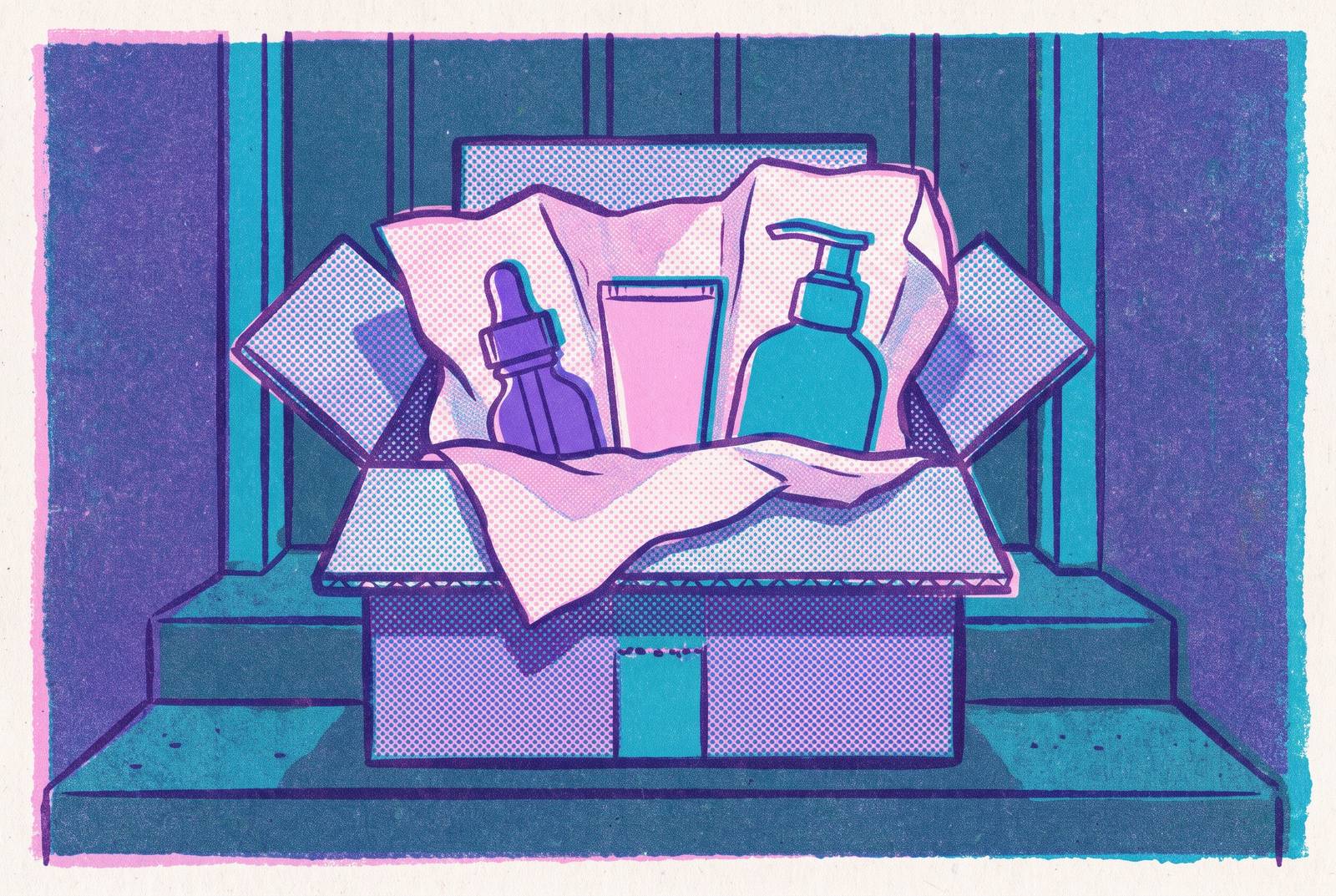
Acne treatment online can provide a prescription after a remote clinician review, with medication shipped directly or sent to a pharmacy you choose. Lemonaid Health handles delivery through its own pharmacy, while Miiskin, TeleDirectMD, and DrHouse offer different pharmacy arrangements. Understanding who reviews your case, who fills the prescription, and how follow-up works is the key to choosing a service.
How online acne services fit into the broader telehealth landscape
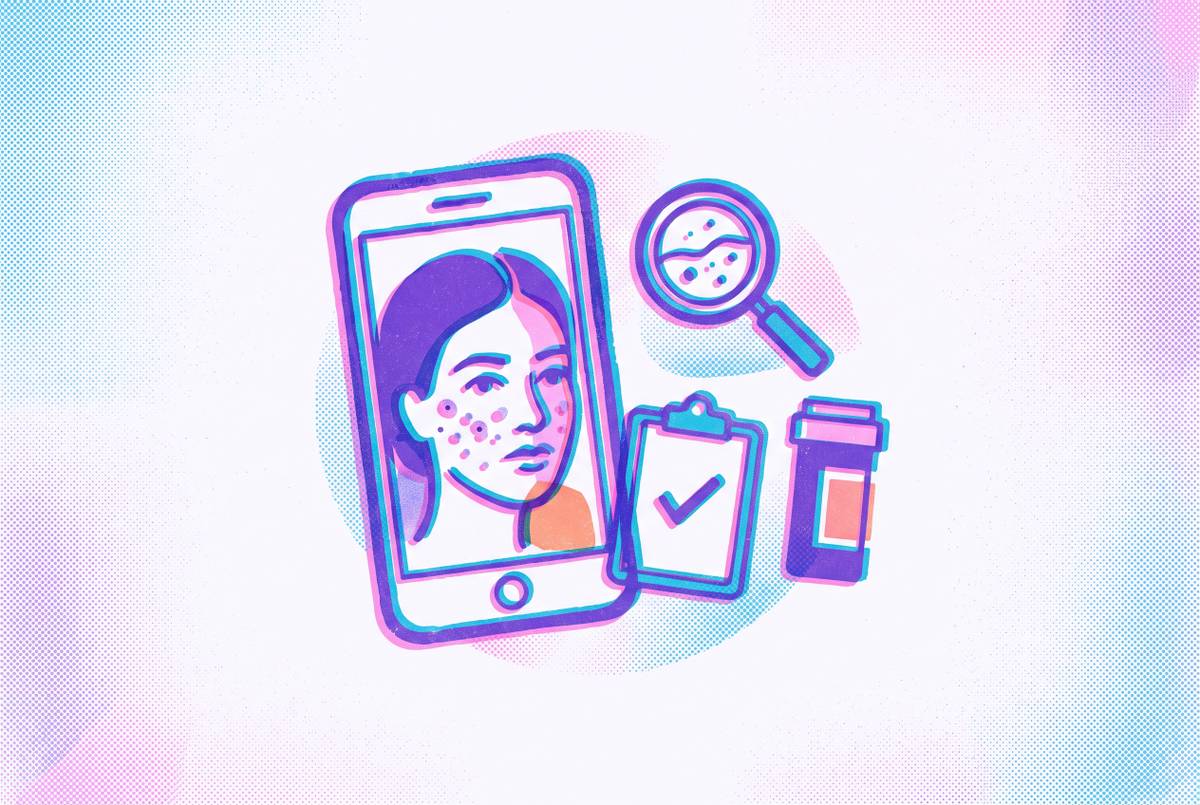
Online acne services are a form of teledermatology, in which patients submit photos and medical histories for remote clinical assessment. Acne is well suited to this approach because judging its severity and choosing a treatment tier are largely visual tasks. Most mild-to-moderate cases do not require an in-person visit. The service connects that assessment to a prescription decision, then either arranges fulfillment or sends the prescription elsewhere.
The consultation itself can take different forms. Store-and-forward care uses photos and a questionnaire, with a clinician replying within roughly a day, while live video visits allow a real-time conversation. Hybrid services combine the two. These are ways of organizing care, with delivery speed depending on both clinical review and the separate step of pharmacy fulfillment.
The end-to-end sequence every direct-ship service runs through
Intake starts with a medical questionnaire and clear, well-lit photos taken from multiple angles. A licensed provider then reviews that material asynchronously or during a live visit. The reviewer may be a board-certified dermatologist, a primary care MD, an NP, or a PA, depending on the service. A professional dermatology association’s teledermatology standards advise verified licensure in the patient’s state, recommend HIPAA-compliant infrastructure, and require providers to follow its supervision recommendations concerning board-certified dermatologist oversight.
The prescription decision comes next, and a prescription is not guaranteed. A clinician may decline to prescribe, write a standard prescription, or order a compounded formula. Fulfillment then branches toward a patient-chosen pharmacy, an in-house or partner pharmacy, or a compounding pharmacy that prepares and ships the medication. Review time is not package arrival time. After delivery, messaging windows, refill schedules, and subscription terms determine how much continuing contact the patient has with the service.
Can I get a prescription for acne through a telehealth app?
Licensed clinicians can prescribe first-line acne treatments online when the patient’s history and assessment support them. Topical retinoids include tretinoin, adapalene, and tazarotene, while topical clindamycin is often paired with benzoyl peroxide to limit resistance. Oral doxycycline and minocycline are options for moderate inflammatory acne. Hormonal treatment can also be available through telehealth. Spironolactone is an option for adult women with androgen-driven acne, and combined oral contraceptives may also meet other health needs some patients have.
Isotretinoin requires a different pathway under the FDA’s iPLEDGE REMS program. The FDA’s 2026 updates allow at-home pregnancy testing during and after treatment with prescriber permission, but pre-treatment pregnancy testing must happen in a medical setting. TeleDirectMD directs patients who need isotretinoin toward in-person dermatology, reflecting the care the service is set up to provide while directing patients to the care they need.
How the platforms that ship medication directly actually differ from one another
Miiskin uses board-certified dermatologists and lets patients choose their dermatologist. Responses arrive within one to two business days, and same-day booking is available. New consultations cost more than follow-ups, with medication charged separately. There is no mandatory subscription, and patients choose their pharmacy or an online source, with compounded medication also available. Patients who want to choose their clinician and pharmacy may like this approach, but they have to manage their own refills because shipments are not automatic.
TeleDirectMD offers same-day video visits with a board-certified MD, including evenings and weekends, in many states. It has a flat self-pay fee and takes insurance in some states, as well as HSA/FSA funds. Prescriptions go to the patient’s chosen pharmacy. Its combination-therapy approach follows AAD guidance, but isotretinoin is outside its prescribing scope.
Lemonaid Health takes the integrated route through its own pharmacy. It ships a 90-day supply directly to the patient’s door with free delivery, and spironolactone is among its prescribing options. Patients have the prescription filled through the service, a different fulfillment model from a service that sends an electronic prescription to a retail pharmacy, even if both ultimately result in a package at home. Patients still pay for treatment even when delivery is free.
DrHouse offers around-the-clock virtual visits and accepts major insurance. Patients select a physician from the available providers, and prescriptions go to a preferred pharmacy for pickup or delivery. Delivery depends on the patient’s ZIP code. The service says delivery is very fast where it is offered, but patients must pick up medication at a pharmacy if there are no local delivery partners. Its location check is therefore more useful to a prospective patient than a general promise of convenience.
How compounded acne medications change the delivery picture
A compounded prescription goes to a licensed compounding pharmacy, which prepares the medication from scratch and ships it to the patient. An alcohol-based clindamycin gel can irritate skin so much that a patient stops using it, but a pharmacist can choose a non-comedogenic, fragrance-free base to suit the skin type recorded in the patient’s history. Compounding can also make combinations that are not sold as manufactured products, such as azelaic acid at higher strengths than in standard products, which may be combined with niacinamide.
In Miiskin’s arrangement with Foothills Pharmacy, the pharmacy receives the prescription, emails a payment link, and ships with free delivery. The regulatory distinction deserves equal attention. The FDA does not approve compounded drugs as formulated or review their safety, effectiveness, or quality before dispensing. For patients considering this pathway, useful questions include whether the pharmacy is accredited and whether it offers a quality guarantee, because standards depend on the specific pharmacy.
The antibiotic stewardship question that runs through every shipped prescription
Convenient refills raise a clinical question when the medication is an antibiotic. The 2024 AAD guidelines strongly recommend combining oral antibiotics with benzoyl peroxide to reduce resistance risk, advise limiting systemic antibiotic duration, and do not recommend topical antibiotic monotherapy. They also strongly recommend combination topical therapy. The 2025 EuroGuiDerm guideline update says patients should usually take systemic antibiotics for no more than three months, with longer courses used only in exceptional circumstances.
Subscriptions that renew antibiotics without a clinician reviewing treatment can keep patients on them beyond evidence-based limits, while services where clinicians reassess treatment at set times help address that risk. For patients, the practical question is how long the antibiotic course will last and when it will be reviewed. It is also useful to ask whether renewal requires a follow-up visit and whether the plan includes a non-antibiotic treatment, such as a retinoid or benzoyl peroxide.
Where AI fits into the intake and clinical process — and where it stops
AI can help organize intake, support symptom triage, provide patient education, suggest over-the-counter products, and monitor adherence. Serial photo analysis can also help track changes over time. Those functions do not establish independent clinical judgment. Translation into routine practice remains limited by gaps in prospective validation, dataset bias, underrepresentation of skin of color, and limited evidence that algorithmic accuracy improves clinical outcomes.
Miiskin uses AI during intake to send a case to the right place and get it ready for a physician to review. Doctronic also uses AI-guided intake, with an optional paid physician visit. These are different levels of human involvement. An AI interaction should therefore not be mistaken for a completed physician consultation. For patients evaluating such services, the useful questions concern what the AI does, whether a licensed clinician will review the case, how personal data is protected, and who takes clinical responsibility.
What the cost picture looks like across care settings in 2026
Online acne care can cost much less than cash-pay primary care or urgent care, and far less than a dermatology office visit, when it uses first-line generic topical treatment. This can make access easier for uninsured or underinsured patients. The total depends on more than the consultation fee, however. Medication choice, pharmacy pricing, insurance eligibility, and recurring charges all affect what the patient pays.
Patients whose prescriptions go to their chosen pharmacy can use GoodRx or similar tools to compare prices, while platform-owned and compounding pharmacies set prices that may not be directly comparable. Subscriptions may cost less per unit, but patients commit to paying again and again. TeleDirectMD’s acceptance of HSA/FSA funds and DrHouse’s insurance acceptance may also change the personal cost picture. To compare costs, patients need to count the visit, medication, delivery terms, and follow-up care they are likely to need, since the advertised consultation charge covers only the visit.
How to prepare for an online acne consultation so it produces something useful
To make a remote consultation useful, prepare photos that show context as well as the worst spots. Use clear photos taken in good light from several angles, and include areas that look clear. The clinician needs a view of the pattern. Poor images can lead to a cautious or generic response because they leave less to assess. A complete history helps fill in what the images cannot show.
Before booking, gather current medications, birth control status, allergies, skin type, and previous acne treatments, including why each was stopped. Those details affect what can safely be prescribed. Also ask who will review the case, what their qualifications are, and how long follow-up messaging remains available if treatment causes a reaction. Confirm state licensure, HIPAA-compliant care, and a route to in-person assessment before payment. These are practical ways to make the consultation more informative.
Preparation also includes understanding what happens after delivery. Dryness, peeling, and irritation from retinoids can contribute to early discontinuation, as can mistaken expectations about treatment duration. Ask what to expect during the first four to six weeks and how to contact the clinician about problems. A package alone cannot answer those questions. Knowing the plan ahead of time makes it easier to keep using the prescribed treatment and ask for help when needed.
When a direct-ship platform is the right first step and when it is not
Direct-ship telehealth is well suited to most mild-to-moderate acne, including papules, pustules, and comedones. It can also fit hormonal acne patterns in adult women, maintenance treatment after diagnosis, and refill needs supported by clear photos and history. The relevant choice is between care models that meet those needs, rather than between online care and an assumed higher tier of in-person care.
Severe cystic acne with significant scarring risk needs in-person evaluation, as do acne accompanied by new systemic symptoms and uncertain diagnoses requiring hands-on assessment. Likely isotretinoin treatment also calls for a pathway that includes its required medical-setting testing. Patients should ask about referral pathways and access to their medical records before booking, so a change in care setting does not become a dead end.
For most everyday cases, a well-chosen online service is an appropriate first step.