How Online Dermatology Platforms Compare for Getting Prescription Acne Medications
Choosing the right platform depends on who reviews your case and what they can prescribe.

Getting a prescription for acne online looks simple on the surface: upload a photo, answer some questions, get a treatment plan. But the platforms doing this work differ enormously in who actually reviews the case, how fast that review happens, and what they're allowed to prescribe. Those differences, not the marketing copy around them, decide whether a patient gets real relief or another few months of trial and error.
Why getting a prescription for acne online is hard
The appeal of online dermatology is obvious. What's less obvious is how real the access problem is that it's trying to solve. Dermatologist wait times stretch well beyond a month in many parts of the country, and a large share of U.S. counties have no practicing dermatologist. For someone with inflammatory acne that's getting worse by the week, the delay isn't an inconvenience to work around but a clinical delay with consequences, since untreated acne can scar.
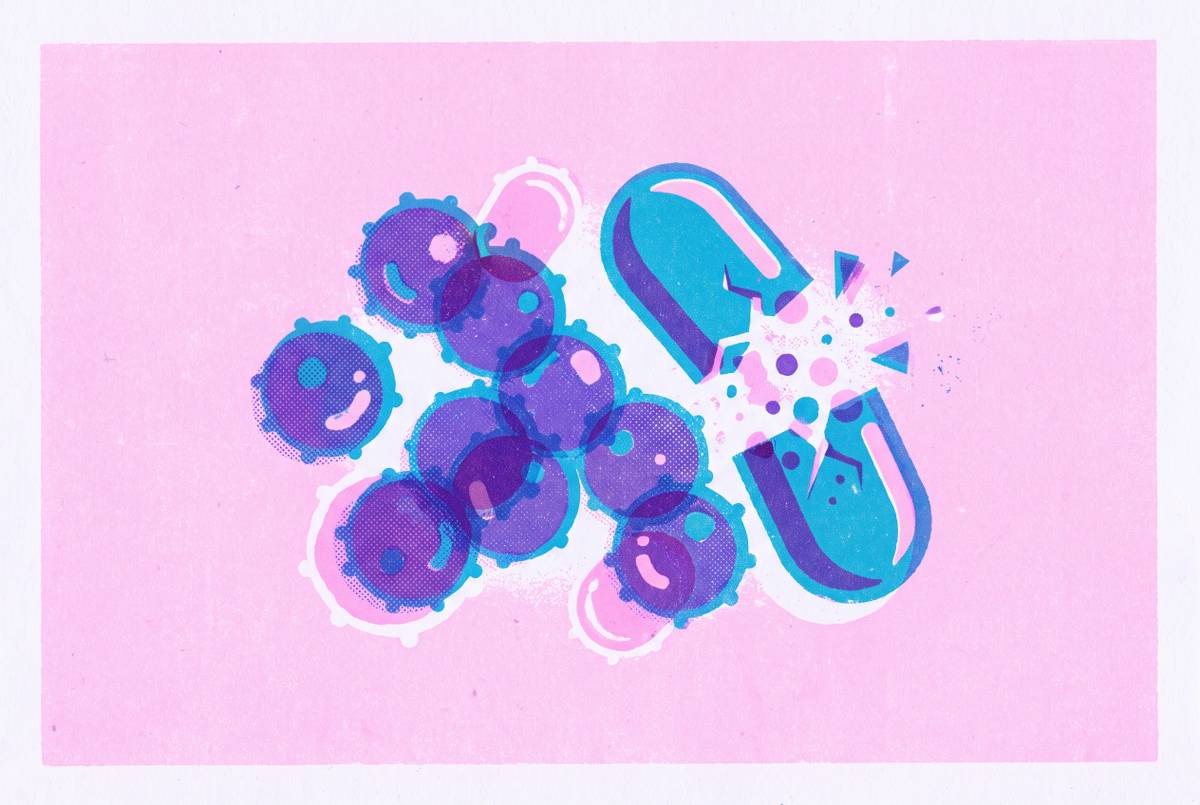
Acne itself doesn't cooperate with a wait-and-see approach. It isn't a surface problem that clears up with patience or a new cleanser. Multiple biological pathways drive it at once: excess sebum production, blocked follicles, bacterial colonization, and inflammation. Because multiple pathways drive acne at once, dermatologists usually must treat them together, combining therapies to produce meaningful clearing.
The medications that actually move the needle: topical retinoids like tretinoin, oral antibiotics like doxycycline, hormonal options like spironolactone, and isotretinoin for severe, scarring cases, are all prescription-only. A patient can read every skincare forum on the internet and still not be able to get any of them without a licensed prescriber signing off. That's the real bottleneck. It isn't information, it's access to someone with a license to prescribe.
Online platforms were built to close that gap, and in large part they have. But they close it unevenly. One might argue that any licensed review beats no review at all, and there's truth to that. Still, the depth of that review, the speed of it, and what the platform can actually put in a patient's hands afterward vary so much that choosing a platform functions less like comparing convenience options and more like making a clinical decision.
The Clinical Encounter: Async Photo Review, Live Video, and AI-Assisted Intake
Before comparing platforms, it helps to understand the three basic formats online dermatology uses, because the format shapes what information a clinician actually has when they write a prescription.
The dominant model is asynchronous, sometimes called store-and-forward. The patient uploads high-resolution photos of the affected skin and fills out a detailed intake form: medical history, current medications, prior treatments tried and failed. A licensed dermatologist reviews that submission on their own time and returns a diagnosis and treatment plan, often within one to two days. It's fast, and it doesn't require booking a slot in someone's calendar. But the quality of what comes back depends heavily on three things: how good the photos are, how thorough the intake questionnaire is, and how much time the dermatologist actually spends on the case. A rushed five-minute review of blurry photos produces a different outcome than a careful one.
Live video consultations work differently. The dermatologist and patient talk in real time, so follow-up questions can happen on the spot, skin can be observed under different lighting or angles, and history can be discussed through conversation. This format tends to suit complex or chronic cases better, where nuance actually changes the treatment plan. It usually costs more and requires scheduling a specific time, which is the trade a patient makes for that back-and-forth.
A third layer has become close to standard across the industry: AI-assisted intake. Platforms increasingly use AI tools to organize a patient's symptom data, flag relevant history, and guide them through capturing useful photos before a clinician ever opens the file. Should patients worry this means a bot is diagnosing them? Not under current practice. AI handles triage and preparation. The clinical review and every prescribing decision stays with a licensed physician.
AI acne tools have performed well in research settings, which is encouraging. Most of the studies behind that performance included limited representation of darker skin tones. The tool should be understood as support for the clinician rather than a standalone diagnostic, and patients with darker skin in particular benefit from a platform where a human dermatologist is doing the actual diagnostic work.
What prescribers can and cannot do for acne remotely
Online dermatology reaches most of the prescription acne formulary. The limits that remain are clinically real, and not every platform reaches the same depth within those limits.
On the prescribable side: topical retinoids like tretinoin and adapalene are first-line treatment for most acne types. Tretinoin, a first-generation vitamin A derivative, has a long track record of evidence behind it for both acne and photoaging. Topical antibiotics such as clindamycin are often paired with other agents to cut down on resistance risk. Oral antibiotics like doxycycline get used for moderate to severe inflammatory acne. Spironolactone, an oral option that reduces androgen-driven sebum production, treats hormonal acne in adult women. It's guideline-recognized: the 2025 EuroGuiDerm update addresses it directly as an adjunct for females with papulopustular, nodular, or conglobate acne.
Isotretinoin for severe acne sits in a more complicated spot. Some platforms support prescribing it along with the required iPLEDGE program monitoring, though periodic in-person lab work is typically still needed. Not every platform has built this pathway out, so a patient with severe, scarring acne should check for it specifically. Compounded multi-ingredient topical formulas work the same way: availability depends on a platform's pharmacy partnerships, and it isn't universal.
What doesn't work remotely: anything requiring a physical biopsy, cryotherapy, or excision. A trustworthy platform will recognize those cases and have a clear path to refer the patient in person rather than trying to manage something beyond the format's reach. And for hormonal acne, combined oral contraceptives can be paired with spironolactone and antibiotics for a more complete approach. Platforms that handle both reproductive health and dermatology can coordinate that combination more easily than ones that only do one or the other.
The dimensions that separate one platform from another
Once the formulary ceiling is clear, the question becomes which platform actually gets a given patient to the right part of it. Marketing language across these services reads almost identically from one site to the next. A handful of structural choices actually separate them, each measured against a patient's specific situation.
Provider credentials matter first. Some platforms route every case to board-certified dermatologists. Others send cases to nurse practitioners or physician assistants depending on the state and the type of consultation. For straightforward acne, that difference may not matter much. For acne that mimics another condition, or for a patient deciding between topical, oral, hormonal, and isotretinoin regimens, specialist judgment carries more weight.
Speed of review is the second dimension, and an advertised turnaround window can differ from an actual measured one. A platform that promises "same-day" review isn't always the same as a platform that has data showing its average response time. Where real numbers exist, they tell a more reliable story than the promise on the landing page.
Continuity of care is the third, and it tends to get overlooked. Acne treatment improvement becomes visible only after several weeks of consistent use. A platform that assigns whichever provider happens to be free on a given day makes it harder to track what's working and adjust a plan that was started by someone else. The clinician who built the original plan is in the best position to change it.
Follow-up structure is closely related. After that first prescription goes out, does anything happen next? Some platforms keep the consultation open for a set window of follow-up messaging. Others schedule a formal check-in. Some offer neither, leaving the patient to start over from scratch if the plan isn't working.
Formulary depth and pharmacy flexibility round out the clinical side: does the platform offer compounded multi-ingredient formulas, an isotretinoin pathway, and the freedom to fill a prescription at any pharmacy?
Cost structure closes the list. Consult fees, subscription requirements, and insurance acceptance vary widely across platforms. For many acne medications, spironolactone being a good example, the consultation fee is the main cost, since the medication itself is often cheap, especially with discount programs. Subscription models offer predictable monthly costs for ongoing management. Single-visit models with a follow-up messaging window suit someone who wants flexibility without a recurring charge.
Put together, these six dimensions are the lens for evaluating any platform: who reviews the case, how fast, with what continuity, what follow-up, how deep a formulary, and at what cost. How much each one matters depends on the patient. Someone with mild, occasional breakouts weighs this differently than someone managing hormonal acne that needs months of adjustment.
How the main platforms compare across these dimensions
No two platforms combine clinical depth, speed, follow-up, and cost the same way, so the right fit depends on what a given case of acne actually needs.
Nolla is built around clinical AI supervised by licensed physicians. An AI-guided evaluation gathers symptoms, history, and current medications, and a licensed clinician then reviews that assessment and builds a personalized treatment plan from it. The system runs on large multimodal models trained on millions of labeled clinical cases, tuned to catch patterns in images and patient data so the clinician starts the review with organized information. Clinician oversight is the design principle the whole model rests on: every prescribing decision is doctor-reviewed, in line with the broader evidence that AI performs best in dermatology as a support tool for licensed specialists. Nolla treats the first visit as the start of ongoing care, with follow-up built into the structure from the outset. Skin health gets the same clinical rigor applied to it as any other specialty on the platform, so acne patients get assessments grounded in standard dermatological practice. It's HIPAA-compliant as a baseline expectation, not a feature to advertise.
Doctronic follows a structurally similar path: an AI-guided evaluation collects symptoms, history, and medications, and a licensed physician reviews that intake to confirm the assessment and write a personalized plan. It prescribes non-controlled medications nationwide, including tretinoin, clindamycin, doxycycline, and spironolactone for appropriate patients. What isn't specified is whether it supports isotretinoin pathways or compounded formulas, so patients needing either should confirm directly before counting on it.
Miiskin takes a different approach by connecting patients exclusively with independent, board-certified dermatologists, and patients choose their own provider and can return to that same person for continuity across visits. Among its measured data, not just advertised promises, average response time across all dermatologists on the platform runs under a day. It supports isotretinoin evaluation pathways for patients who qualify, requires no subscription, and offers pediatric dermatologists as part of its roster, which matters for families managing teenage acne.
Honeydew specializes specifically in acne, including hormonal acne, with same-day or next-day consultations through licensed dermatology providers that include board-certified dermatologists alongside nurse practitioners and PAs. Video consultations, when needed, are typically available within 48 hours. Pricing runs on a transparent subscription: an annual option or $39 a month with a minimum commitment. That structure suits someone whose acne is driven by hormones and who wants ongoing, specialist-level care, provided they're comfortable planning for a recurring cost.
Nurx, Hers, Musely, Doctor On Demand, and Clear Health each occupy a place in this same landscape, generally built around the asynchronous review model, with pricing and provider structures that vary by service and by state. Patients comparing them against the platforms above should apply the same six dimensions: who's reviewing the case, how fast, with what continuity, what follow-up looks like, how deep the formulary goes, and what the actual cost structure is before signing up.
Choosing among all of these means matching the structure of care to the structure of the problem. Mild, occasional acne might do fine with a fast async review and a single prescription. Hormonal acne that needs months of titration benefits more from continuity and built-in follow-up. Severe, scarring acne needs a platform that actually has an isotretinoin pathway, not just a general promise of care. The six dimensions covered here, provider type, speed, continuity, follow-up, formulary depth, and cost, give a patient a concrete way to ask the right questions before committing to any one platform.