When Skin Tracking Data Should Be Shared With a Clinician
Track patterns over time, not single events, to give your clinician actionable skin data.
Skin diseases affect more than 3 billion people worldwide. The clinical encounter for most of them runs maybe 15 minutes, once every few months, and in between, patients are on their own to notice, remember, and describe what's happening to their skin. That gap is where the useful information quietly disappears. This piece is about which self-tracked observations actually rise to the level of clinical signal, and how to hand them over so a clinician can use them without wading through noise.
What skin tracking tools can and cannot capture
The tools cover a fair amount of ground now. Smartphone photography apps, wrist-worn accelerometers that pick up scratching and nighttime movement in atopic dermatitis, UV sensors, hydration meters, all of it generating a steady stream of symptom photos, survey data, scratch-frequency readouts, and environmental logs.
Among the objective measures, transepidermal water loss, or TEWL, is the closest thing to a real clinical benchmark for barrier function. When TEWL climbs, the skin is letting more water escape than it should, which is a fairly direct signal something's compromised. But here's the catch worth sitting with: most consumer-grade tools have not been validated against clinical benchmarks like TEWL. Digital health tools in dermatology need to demonstrate more than the ability to record a consistent number — the harder question is whether the number recorded actually reflects the underlying biology. That's worth saying plainly rather than dressing up: a device that reliably produces a readout isn't the same thing as a device that's been shown to produce the right readout.
Add the daily friction, strap irritation, forgotten charges, skipped reapplications, and the data set gets patchy fast. The tools still have value. That value only shows up once someone contextualizes what got collected, instead of treating the raw readout as a finished conclusion.
The difference between a data point and a clinical signal
One photo, one itchy night, one dry patch on a Tuesday: none of that tells a clinician much on its own.
What turns a data point into a signal? Three things: duration, directionality, context. How long has this been going on. Is it getting better, worse, or just sitting there. And what else was happening at the time, diet, a new medication, weather, stress, a missed period, a switched moisturizer.
Symptoms attached to the visual change matter too. Itching, burning, soreness, weeping, blistering, bleeding, these turn a picture into a symptom complex, a different category of information entirely. Timing lags deserve attention as well. Some infections or medication reactions show up on the skin days after the actual trigger, so a log that only captures the flare itself, without the week leading up to it, misses the exact part that would let a clinician trace cause back to effect.
Think of it the way a mechanic reads a single dashboard photo. One frame of a check-engine light tells you almost nothing. A log of when the light comes on, under what driving conditions, over how many weeks, that's diagnostic material. Skin data works the same way, and treating a single photo as a diagnosis is the most common mistake in this whole exercise.
Patterns in chronic inflammatory conditions that warrant clinical sharing
Psoriasis and atopic dermatitis account for tens of millions of patients in the U.S. alone, and they're the conditions where longitudinal tracking earns its keep most clearly.
With psoriasis, infection is a documented trigger for flares. A systematic review covering close to 32 million participants found infection associated with a 64% increased risk of psoriasis. So a log showing a cold, sinus infection, or strep throat two to three weeks before a flare is worth flagging by name when that record gets shared, not folded into a vague note about "feeling off that month."
Atopic dermatitis has its own tell: nocturnal scratching. Wrist-worn devices tracking nighttime scratch frequency and sleep disruption offer a more objective picture of disease activity than self-reported symptom recall alone. A pattern of scratching that climbs consistently over time is a sign the current treatment may not be holding the line.
Hormones matter here too. Roughly 47% of female eczema patients, per the National Eczema Association, notice flares tied to their menstrual cycle. That's attribution data, and it belongs in the record, named as such rather than buried in a general symptom description.
What separates a signal worth sharing from a bad week that isn't? A single rough day is just a single rough day. A tracked trend, worsening severity across two weeks or more, with the same symptoms recurring, is a pattern a clinician can act on.
Red flags skip the waiting period entirely, regardless of trend. Weeping, oozing, blistering, bleeding, or a foul odor showing up in a photo log calls for prompt review, not more tracking.
How contraceptive and hormone changes create a high-value tracking window
Starting, stopping, or switching a hormonal contraceptive ranks among the most common triggers for a new or changed skin condition. It's also one of the hardest things to trace back without a clear timeline, because by the time the skin change gets noticed, the pill switch is already old news.
The mechanism has real nuance. Estrogen suppresses androgen-driven acne, which is why combined oral contraceptives, estrogen plus a progestogen, often improve breakouts. Progestogen-only pills are the opposite story: depending on the specific progestin, the androgenic activity can actually worsen acne. Same broad drug category, opposite effect, purely a matter of formulation, and that's exactly the kind of detail a tracking log needs to capture rather than assume.
Other hormonally linked conditions worth watching: perioral dermatitis, which tracks with estrogen shifts and premenstrual timing, and melasma. Research has examined the connection between fluctuating estrogen and progesterone and changes in both barrier integrity and immune activity in the skin.
Why does tracking matter so specifically here? Because a clinician needs onset timing relative to the contraceptive change, location on the body, and whether it correlates with cycle day, none of which survives well in memory three months out. A useful tracking window includes the date of the contraceptive change, weekly photos of the affected area, a clear label for the symptom, new acne versus worsening eczema versus a rash around the mouth, and cycle day when it's known.
The threshold for sharing: any new skin condition starting within one to three months of a hormonal change, that hasn't resolved on its own within four to six weeks, deserves a conversation, tracking record in hand.
Tracking treatment tolerance and response to evidence-based ingredients
Two categories deserve close tracking: prescription-adjacent actives like retinoids, and barrier-support ingredients like ceramides and niacinamide that sit on drugstore shelves but carry real clinical weight.
Retinoids come with a predictable adjustment arc, peeling, redness, sensitivity that spikes before it settles. Tracking that arc over several weeks gives a clinician what's needed to adjust dose or frequency with actual precision, rather than guessing off how skin looks at a single appointment months apart.
Niacinamide has a solid evidence base for barrier support in the stratum corneum, the skin's outermost barrier layer, and is a common active in products studied for dry skin. If a log shows persistent dryness despite consistent niacinamide use, that's the signal something else is driving the problem, not the ingredient failing.
Ceramides reinforce that same barrier directly. A study of 89 subjects with dry skin found meaningful improvement across both clinical exams and instrument measurements after 28 days of ceramide- and niacinamide-containing products. Tracking data that lines up with, or diverges from, that four-week window gives a clinician a real basis for judging whether the product is doing its job, instead of a subjective impression months later.
What makes this data useful at a consult? Consistent application dates, so it's clear the product was actually used as directed. A side-effect log tied to the application date. Photos at the same interval, similar lighting. Clear notes on any formulation switch mid-course, since changing products resets the clock on what the data is even measuring.
What a clinician actually needs from your tracking data
Ninety daily log entries sound thorough. To a clinician working with limited time, that volume is often harder to use than five well-chosen data points with the pattern already pulled out. More data isn't the goal here; the right data is.
Three things make tracking data actionable in an actual consult. A clear timeline: when did this start, when did it peak, is it stable or still moving. Context tied directly to that timeline: what changed in the weeks before onset, new medication, new product, hormonal shift, illness, a change in climate. And photographs, dated, consistent lighting, framed the same way each time, because a short series beats a single image by a wide margin.
Symptoms need to be named plainly, too: itching intensity, burning, soreness, sleep disruption, bleeding, not just described in terms of how the skin looks.
What should get left out? Every minor fluctuation, duplicate photos from the same day, stretches with no skin involvement at all, all of it just burying the actual signal. A one-paragraph written summary paired with a curated photo set, at minimum one photo per week, stepping up to one per day during an active flare, comes close to the ideal hand-off for an asynchronous review.
How asynchronous telehealth handles skin tracking data — and where it works best
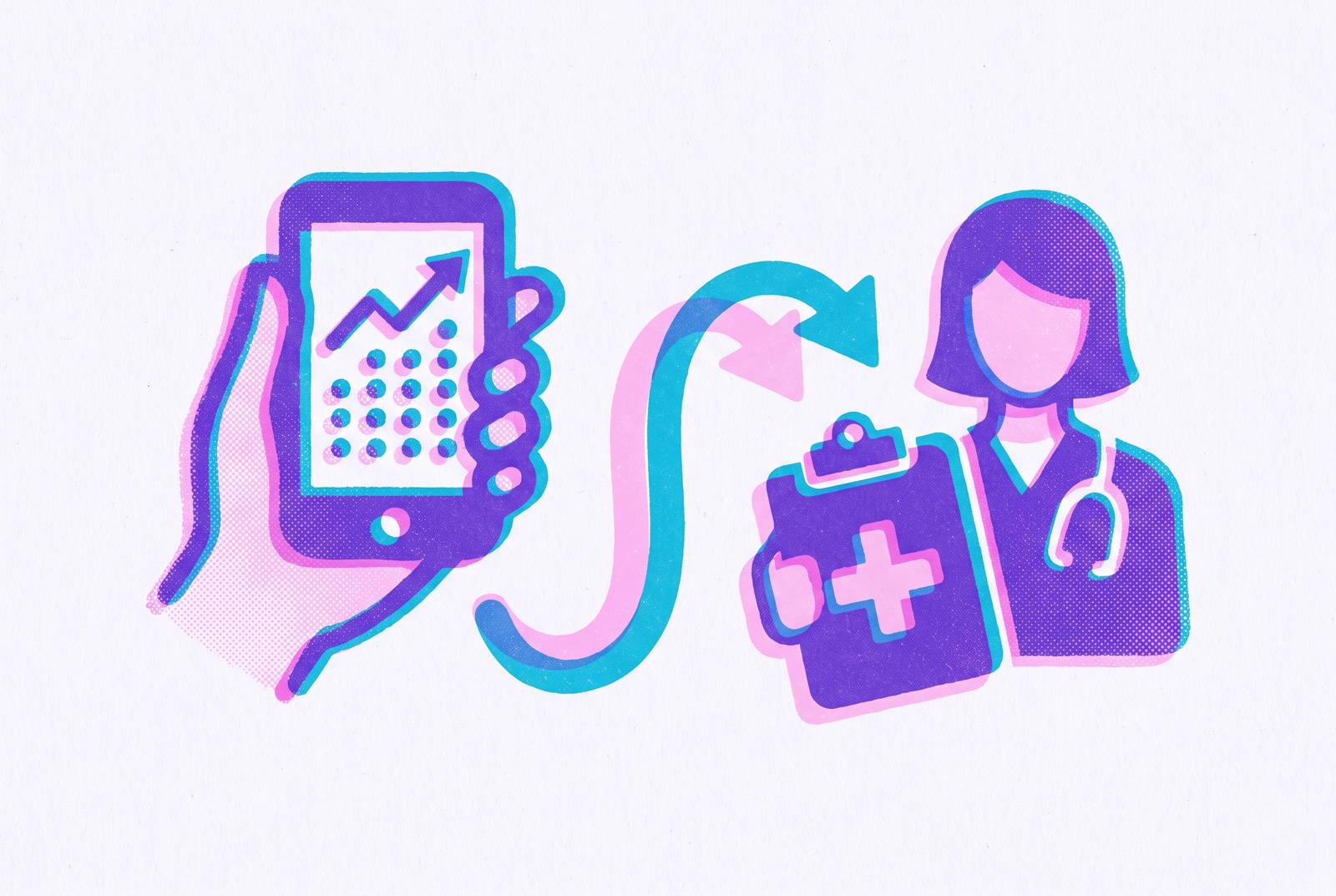
Store-and-forward teledermatology means a clinician reviews submitted photos and patient-reported information without a live appointment. It's the format best suited to a tracking hand-off, since the whole model already runs on submitted evidence instead of conversation.
The accuracy numbers hold up. A systematic review found overall sensitivity of 94.9% and specificity of 84.3% for teledermatology against in-person assessment. A single-center study of 955 lesions found 94% diagnostic accuracy, performance that compares favorably with general-practitioner assessment alone.
The limitation is built into the format: no live back-and-forth means no follow-up question in the moment. That's exactly why a well-prepared summary carries more weight in asynchronous care than in a live visit; there's no chance to fill gaps afterward.
Asynchronous review works best for stable or slowly evolving chronic conditions, monitoring how a treatment is landing, contraceptive-related skin changes, and initial triage of a new lesion, all cases with heavy overlap with the tracking scenarios already covered here. It works less well for anything moving fast: a rapidly worsening rash, suspected infection, or a situation where a hands-on exam, checking warmth, texture, lymph nodes, would actually change the treatment plan. Those need a synchronous or in-person visit, full stop.
Message-based consultations with a licensed clinician offer a low-barrier way in for patients whose tracking has already turned up a pattern worth reviewing. That brief exchange only works because the tracking record did the heavy lifting beforehand. Worth noting: access gaps remain a real concern, so platforms built with accessibility in mind from the start close more of that gap than ones that treat it as an afterthought, which is the design logic behind services like Nolla, an AI-assisted skincare telehealth platform where licensed US clinicians review submitted symptoms and issue prescriptions for acne, rosacea, and related conditions in about ten minutes.
The threshold question: when to stop monitoring and start the conversation
Tracking earns its value right up until it becomes a way of avoiding care instead of preparing for it. The whole point is to make the eventual conversation sharper, not to postpone it indefinitely, and losing sight of that turns a useful habit into a stalling tactic.
A few signs mean the data's ready to bring to a clinician, and any one of them alone is enough, not all four together. A pattern that's persisted or worsened over two weeks or more despite consistent self-care. A new symptom that wasn't there when tracking started: bleeding, oozing, pain, rapid spread. A condition that began or shifted noticeably within weeks of a medication or hormonal change. A treatment that isn't producing the expected result by the point it should.
Some situations skip past tracking altogether. Fever alongside skin symptoms, a rash spreading fast, a lesion that looks infected, any mole or pigmented spot that's changed in size, shape, or color, these call for in-person care, not another week of photos.
Tracking supports clinical judgment; it doesn't substitute for it. It's the raw material that makes judgment faster and sharper, matched to what's actually happening day to day rather than what's visible during one appointment every few months. A patient who shows up, whether to a telehealth visit or an in-person one, with a record that's organized and already in context, gets more out of the limited time a clinician has to give, and walks in able to advocate for something specific instead of describing a feeling.