Milia Removal Methods and When Each Is Appropriate
Successful removal depends on matching treatment to milia type and location.
Milia are those tiny, firm white bumps that show up on the face, most often around the eyes, and refuse to budge no matter how much you pick at them. That refusal isn't stubbornness, it's structure: milia are small keratin cysts sitting just under the outermost layer of skin, sealed off with no pore opening to the surface. Treatment only works when it matches the type of milia, where it sits, and how long it's been there. The rest of this piece walks through how those three factors actually determine what to do.
Before getting into treatment, it helps to know what's happening under the skin. A milium forms when dead skin cells don't shed the way they're supposed to. Instead of flaking off, they get trapped beneath a new layer of skin and harden into a small cyst, wrapped in a small epithelial cyst wall. That's a mouthful, but the part that matters is simpler: the cyst has no exit. There's no follicle, no pore, no channel connecting it to the surface. That's why squeezing does nothing except bruise the skin around it and, over time, invite a scar.
Milia show up in infants at a rate high enough to call routine (something like 40 to 50% of full-term newborns get them), but they're not exclusive to babies. Adults of every skin tone and background develop them too, and the reasons why differ enough that a single fix doesn't cover every case.
How milia type determines what treatment is even on the table
Not all milia are created the same way, and that distinction should come before anyone reaches for a retinoid or books a dermatologist appointment.
Primary milia form on their own, without any preceding skin injury. This category splits further:
- Neonatal milia show up at or shortly after birth, usually clustered on or near the nose. They clear up without any help.
- Primary milia in children and adults tend to settle around the eyes, forehead, cheeks, and genitals. In adults, some resolve on their own within weeks to months. Others just stick around.
- Juvenile milia are tied to genetic conditions, Rombo syndrome, basal cell naevus syndrome, Bazex-Dupre-Christol syndrome, pachyonychia congenita, and Gardner syndrome among them. This isn't a case for at-home treatment; the underlying conditions involved are complex enough to warrant professional evaluation.
- Milia en plaque, often shortened to MEP, is rare and shows up as a cluster of milia sitting on a raised, thickened patch of skin, typically near the ear, eyelid, cheek, or jaw. Women between 40 and 60 are the most common patients. MEP doesn't respond well to extraction alone. It needs tretinoin or an oral antibiotic like minocycline to actually clear.
- Multiple eruptive milia appear in crops over the course of weeks or months. Sometimes it's sporadic, sometimes inherited, and figuring out which one shapes the approach a clinician will take.
Secondary (traumatic) milia show up after some kind of skin damage, burns, blistering rashes, years of sun exposure, dermabrasion, a chemical peel that went a bit too deep, ablative laser resurfacing, long-term steroid cream use, or certain medications such as fluorouracil. These can be more stubborn than primary milia, and treating them without addressing whatever caused them in the first place is a losing game. A rarer subtype ties back to blistering autoimmune diseases like epidermolysis bullosa or bullous pemphigoid. In those cases, the milia are a side effect. Treating the underlying disease comes first.
So the type dictates the path: neonatal milia get left alone, adult primary milia get topical treatment or extraction, secondary milia need the trigger addressed first, MEP needs a prescription approach, and juvenile milia go to a specialist.
One more thing. A dermatologist isn't just there to remove a bump, they're there to confirm it's actually milia and not something else. Basal cell carcinoma can look like a small, pearly, flesh-colored papule. Not every white bump on the face is harmless, which is exactly why a second opinion matters when something looks new or unusual.
The triggers and product habits that create the conditions for milia
Four mechanisms tend to be behind most milia cases, and once you see the pattern, the prevention side gets a lot more obvious.
Skin cell turnover slows with age, hormonal changes, or a compromised skin barrier, and slower turnover means more dead cells hanging around waiting to get trapped. Separately, heavy, occlusive products, thick creams and balms, physically block the skin's own exfoliation process. Chronic sun exposure thickens the stratum corneum (the skin's outer layer), which makes shedding harder and is a recognized cause of secondary milia in adults. And ironically, over-exfoliating causes the same problem from the opposite direction: stripping the barrier too aggressively triggers inflammation, and that inflammation can produce more milia, not fewer.
The skin around the eyes deserves specific attention here. It exfoliates less efficiently than skin elsewhere on the face, which is part of why it's one of the most common milia sites. Ingredients like mineral oil, petrolatum, beeswax, lanolin, and dimethicone, all common in eye creams, sit on that skin and make the shedding problem worse.
Beyond eye creams, other everyday products carry the same risk: makeup and makeup removers not labeled oil-free, hair spray, mousse, gel, heavy sunscreen formulas, and certain lipsticks or lip balms (milia along the lip border, known as the vermillion border, may trace back to heavy or occlusive products applied in that area).
Some professional treatments, medium-to-deep chemical peels and ablative laser resurfacing among them, can themselves trigger secondary milia. That's a detail to keep in the back pocket for later in this piece, when the professional treatment options come up.
Figuring out what's causing the milia matters as much as treating the milia themselves. Treating the bumps while continuing the habit that caused them (say, sleeping in a heavy eye cream every night) just means the cycle keeps going.
When doing nothing is the right decision
Neonatal milia don't need treatment. They resolve on their own within weeks to about a month of life, without leaving a scar, and parents can be reassured that this is completely normal newborn skin behavior. No cream, no procedure, no rush.
Adult primary milia are a little less predictable, but observation is still a reasonable first move if the bumps are new and not bothering anyone. Some clear up within a few months without any intervention at all.
That said, adult milia don't behave like neonatal milia across the board. Neonatal milia clear up reliably. Adult milia don't share that same guarantee, and once a lesion has been sitting there for a few months without change, it's a decent signal that it's not going to resolve on its own and some kind of active treatment will be needed.
Milia are harmless. They're not a health risk, and treating them is an elective choice, not a medical necessity. Nobody should feel pushed into a procedure for a bump that isn't hurting anyone.
That said, a few situations call for moving from watching to treating, such as milia that stick around for months, a location right on the eyelid margin, a cosmetic concern that's genuinely bothering the person, or uncertainty about whether the bump is actually milia and not something like basal cell carcinoma. That last one is a job for a clinician, not a mirror and a magnifying glass.
Topical approaches that work and the skin chemistry behind them
Once treatment is warranted, retinoids are the backbone of most topical approaches, and understanding why gets at the core mechanic of milia treatment in general.
Milia sit under an intact layer of skin. There's no pore to push keratin out through, so pressure-based approaches don't work. Retinoids solve this differently: they speed up keratinocyte turnover (the rate at which skin cells cycle and shed) and slowly thin the wall of the cyst from below, until eventually it can release. Prescription options like tretinoin and adapalene both work this way. Adapalene is now available over the counter, and a reasonable starting point is applying it two to three times a week, increasing frequency slowly as skin tolerates it.
Retinoids should never go directly on the upper eyelid, a caveat that matters more here than almost anywhere else on the face. That's a real safety issue, not a minor caution, especially given how often milia show up right in that zone.
On the specialist side, some dermatologists have moved toward trifarotene, a newer, fourth-generation retinoid that specifically targets gamma retinoic acid receptors, which are especially common in skin tissue. It's a more targeted tool, not a replacement for standard retinoids across the board.
Now, a common point of confusion: AHAs versus BHAs. Salicylic acid, a BHA, is oil-soluble and does its best work inside follicles and pores, dissolving the buildup that causes blackheads and acne. But milia sit outside a pore. They're subepidermal. So salicylic acid on its own rarely does much for milia specifically. AHAs like glycolic acid and lactic acid work differently: they dissolve the bonds holding dead skin cells together at the surface level where milia actually sit, which makes them the more reliable choice. A glycolic acid product or a retinol serum, used consistently, can show visible improvement over time.
Ingredients worth seeking out include hyaluronic acid for hydration without occlusion, along with lactic acid, glycolic acid, and salicylic acid as part of a broader skincare routine (not necessarily as a standalone milia treatment). Ingredients worth skipping near milia-prone areas include petrolatum, mineral oil, lanolin, and heavy dimethicone-based formulas.
Sun protection deserves a mention too, not as an afterthought but as actual prevention. Daily broad-spectrum sun protection helps limit the chronic UV exposure that thickens the stratum corneum and impairs normal shedding. Near the eyes specifically, a lightweight fluid or gel SPF beats a thick cream, for the same occlusion reasons already covered above.
Timelines vary. Depending on skin type and consistency, results show up anywhere from a few weeks to a few months in. If milia keep coming back after treatment, that's usually a sign of either an ongoing keratinization issue or a trigger that hasn't actually been removed. A maintenance routine, retinoid two to three nights a week, paired with steering clear of heavy eye creams, cuts down on recurrence.
And for some cases, topicals simply won't be enough. Stubborn milia, high lesion counts, or anything sitting right on the eyelid margin usually needs a professional hand.
Professional removal: what each method involves and who it suits
These procedures are generally not covered by insurance, since milia removal is considered cosmetic in most cases.
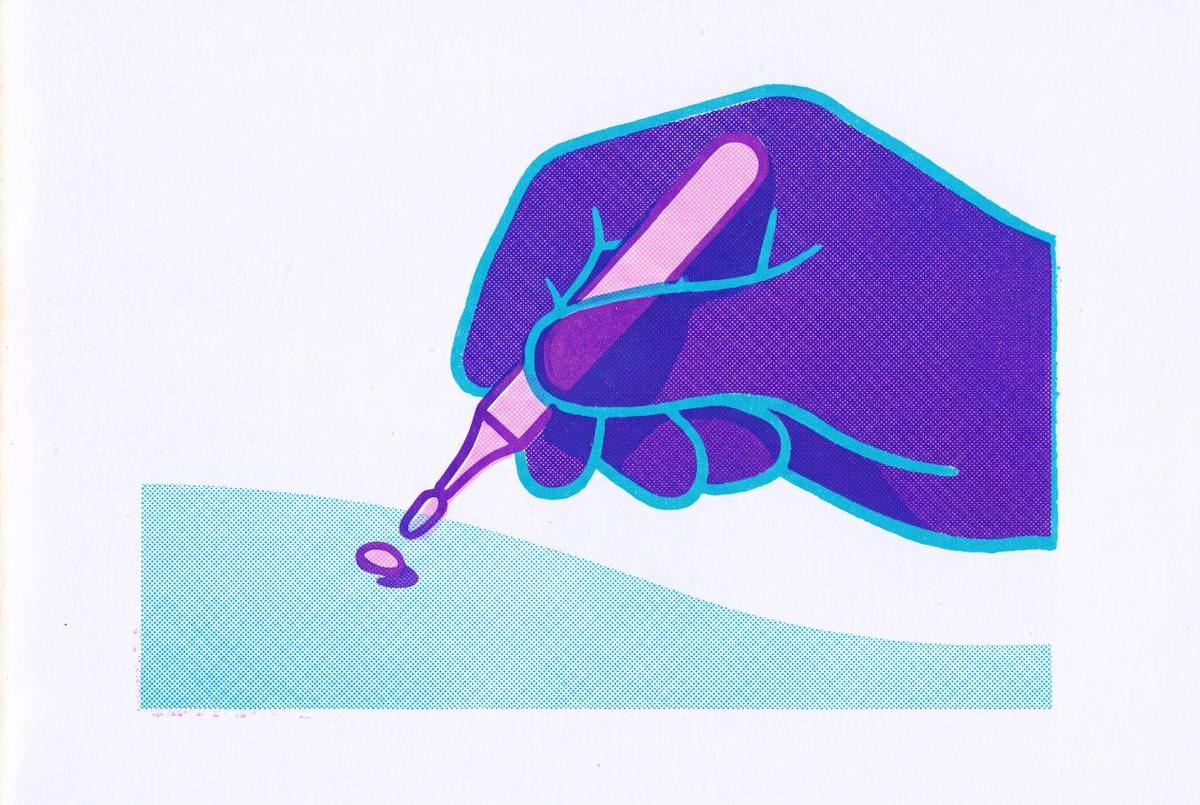
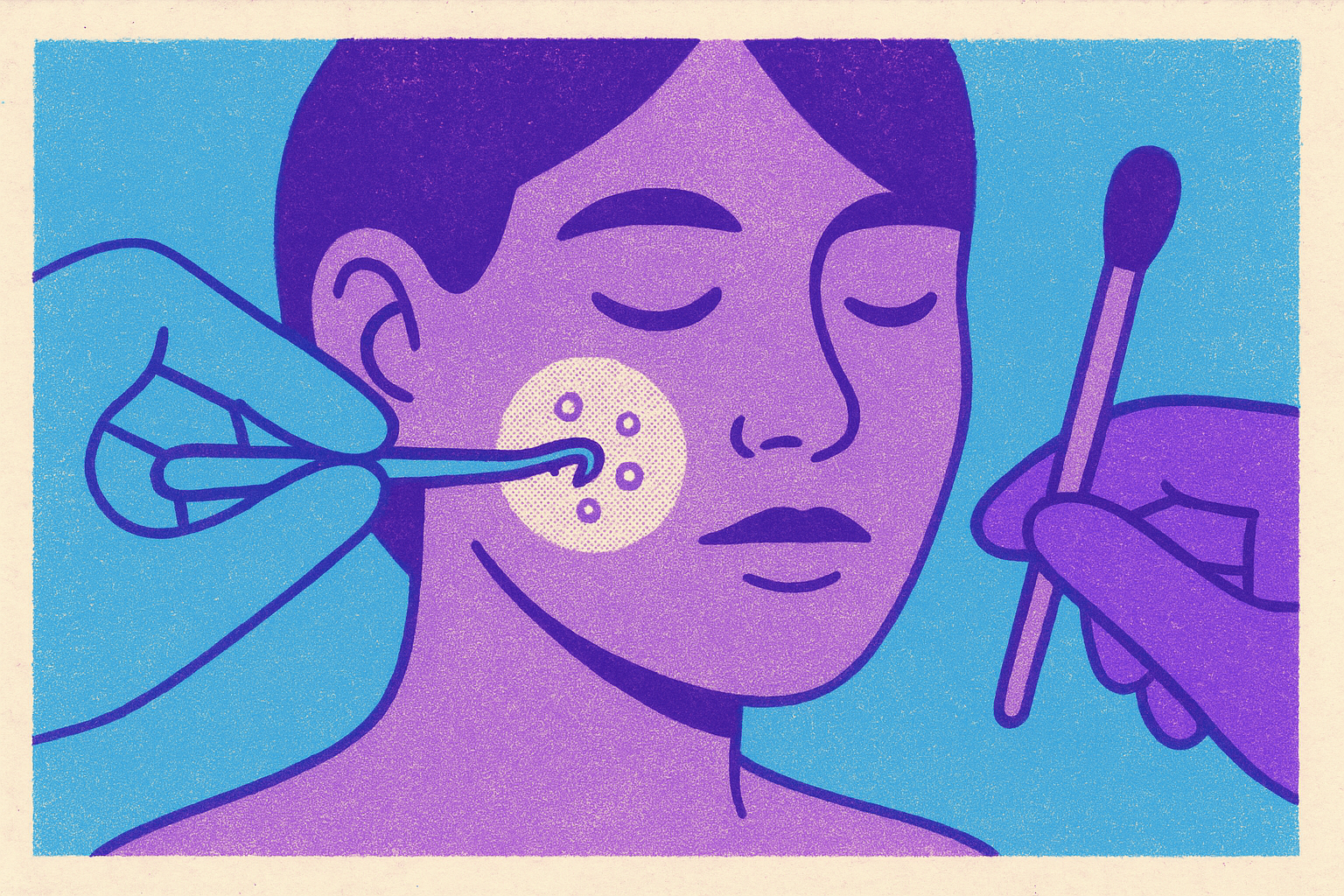
Manual extraction, also called de-roofing, is the standard first-line professional treatment. A dermatologist uses a small lancet to open the roof of the cyst, then presses out the keratin plug with a comedone extractor. Patients usually feel a mild prick, and anesthesia typically isn't needed. This method suits isolated or small clusters of milia, most eyelid milia, and patients with darker skin tones, who carry a higher risk of post-inflammatory hyperpigmentation from more aggressive procedures like laser. One exception: large clusters or a high lesion count right at the eyelid margin may call for an ophthalmology referral instead of dermatology extraction, since that tissue is delicate enough to need specialized handling.
A newer variation uses a syringe needle for penetration combined with suction. It reduces how much surrounding tissue gets handled during the procedure. It doesn't need any special equipment beyond the syringe, and it works particularly well on smaller milia. Larger ones surface during the process and get removed with gauze.
Even with a trained hand, extraction carries some risk of scarring or hyperpigmentation. That's a conversation worth having directly with a provider before scheduling anything, weighing the risk against how much the milia are actually bothering the patient.
Laser ablation breaks down the trapped keratin with focused light energy, letting the body reabsorb it. This method fits best when there are multiple milia clustered close together, dense enough that manual extraction one by one would take forever. The tradeoff: higher pigmentation risk for darker skin tones, and it requires a provider experienced enough to choose the right laser settings for the patient's skin type.
Chemical peels, done at in-office strength, use a glycolic or salicylic acid solution to remove the top layer of skin and let fresh skin surface underneath. Mild peels cause minimal discomfort, maybe some stinging, and don't need anesthesia. This route works best for people already used to chemical exfoliants in their routine. It's not the best entry point for someone trying chemical exfoliation for the first time specifically to treat milia, since reactive or sensitive skin can develop secondary milia if the peel is too strong. Peels and resurfacing, when too aggressive, are themselves a known trigger for secondary milia. Strength has to be calibrated to the individual, not applied as a blanket approach.
Cryotherapy uses liquid nitrogen to freeze and destroy the cysts. Some temporary swelling or blistering follows, but it clears up within days. This method sees less use overall than extraction, and it's not appropriate anywhere near the eyes, periorbital skin is too thin and delicate for that level of freeze response. It fits better on the trunk, cheeks, or other areas farther from the eye where a more aggressive method is tolerable.
Prescription systemic or topical therapy applies to MEP and eruptive subtypes specifically. Milia en plaque responds to tretinoin or minocycline (an oral tetracycline antibiotic), and it's often tied to autoimmune or inflammatory skin conditions like discoid lupus erythematosus or lichen planus, so removal by itself won't fix the underlying issue. Multiple eruptive milia calls for figuring out whether the cause is sporadic or inherited first, since that answer determines whether topical maintenance or specialist management makes more sense going forward.
Matching method to situation: a location- and skin-type framework
Location changes the calculation more than almost anything else.
Around the eyelid and periorbital area, manual extraction (de-roofing) is the safest bet. Cryotherapy is off the table here, laser needs real caution, and retinoids should never go directly onto the eyelid itself at home. If lesions at the eyelid margin are large or numerous, that's a case for ophthalmology, not standard dermatology extraction.
Cheeks, forehead, and nose open up the full range of options, with skin tone and lesion count narrowing the choice from there. Along the lip border, the vermillion border, the first move is figuring out which lip product is causing the problem and cutting it out, with extraction as a second step if the milia don't clear on their own. On the trunk and other extremities, cryotherapy becomes more viable, and topical retinoids work well for ongoing maintenance.
Skin tone matters just as much as location. For darker skin tones, the risk of post-inflammatory hyperpigmentation climbs with laser and other more aggressive procedures, which makes de-roofing (including the insulin syringe variation) the generally preferred professional route. Fair to medium skin tones have more procedural flexibility, though the conversation about individual risk still needs to happen before any treatment starts.
How many lesions there are, and how long they've stuck around, shapes the decision too. A single bump or a small handful that showed up recently is a reasonable case for watching and waiting, or trying a topical retinoid first. Clustered or numerous milia are usually better served by an in-office laser or peel than by extracting each one individually, purely for efficiency's sake. And milia that haven't budged after months of consistent topical treatment are a solid case for professional extraction.
Type still overrides all of this in certain cases. Neonatal milia get no treatment at all. Isolated adult primary milia get a topical trial first, extraction second if needed. Secondary milia need the trigger removed before treatment even starts. MEP and eruptive milia need prescription therapy, not mechanical removal on its own. Juvenile milia, tied to genetic conditions, go straight to a specialist.
For most adults dealing with milia that won't quit, a message-based or asynchronous consultation with a clinician is a sensible first step before booking anything in person. It can confirm the diagnosis, rule out look-alikes like basal cell carcinoma, and map out a treatment plan before any procedure gets scheduled.
What raises the risk of scarring and how to stay on the right side of it
The single biggest cause of milia scarring isn't a procedure gone wrong, it's squeezing. Since milia have no exit channel, pressure just causes bleeding, scabbing, and eventually scar tissue, without ever actually releasing the cyst. Scraping at the skin carries its own risk too: it opens the door to infection on top of the scarring risk.
Even professional extraction carries some scarring risk. That's exactly why the conversation between patient and dermatologist about risk versus benefit needs to happen before any procedure, not after.
There's also a self-inflicted version of this problem. Facial peels or exfoliants that are too aggressive for someone's specific skin type can trigger secondary milia as a direct result, turning a well-intentioned skincare routine into the exact problem it was meant to fix. That's the case for going slow, patch-testing new actives, and increasing strength gradually rather than reaching for the highest percentage product on the shelf. The bumps aren't dangerous. But the impulse to rush a fix, whether that's squeezing at home or over-treating with something too strong, is what turns a harmless cyst into a lasting mark.